

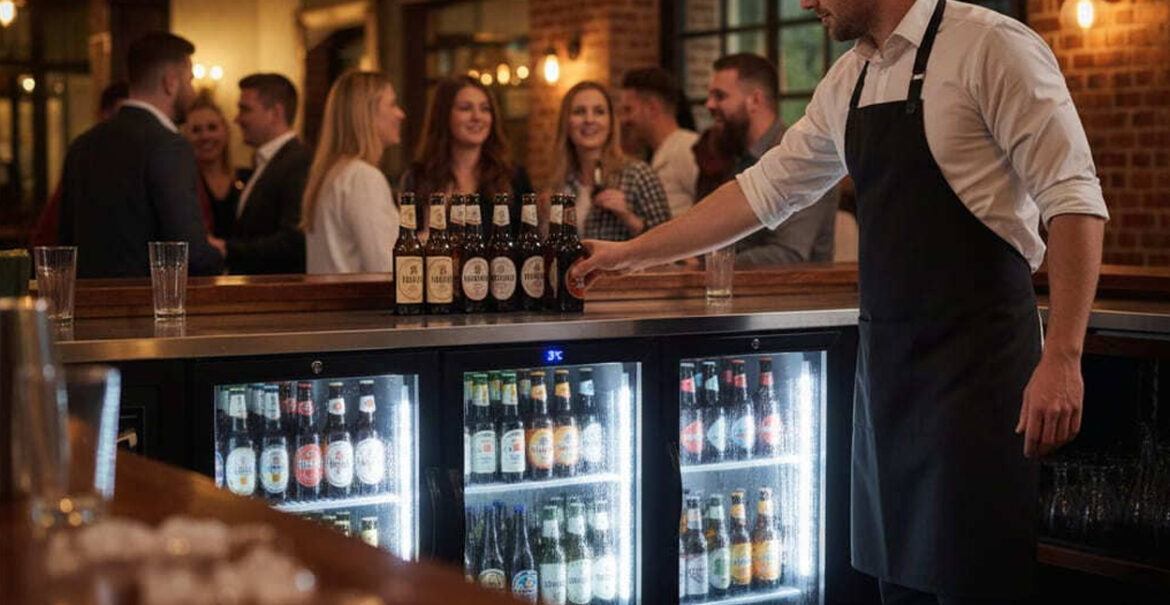
Bar Fridge Buying Guide 2026 | How to Choose the Right Model
- Type: Choose between under-bench, 2–4 door, or upright glass door based on your space, service volume and whether the unit is back-of-house or customer-facing.
- Tropical rating (T-class): Essential for Australian venues — T-class fridges handle ambient temperatures of 32°C+. A non-T-rated unit in a warm bar environment will fail prematurely and void the warranty.
- Ventilation: 100mm minimum rear clearance is required by all manufacturers — insufficient clearance causes compressor overheating and immediately voids the warranty.
- Fan-forced cooling: Non-negotiable for any high-access bar fridge — ensures rapid, uniform temperature recovery after door openings.
- Refrigerant: R290 (hydrocarbon) delivers up to 15% lower energy consumption and a GWP of just 3 vs 3,922 for R404a — the clear choice for energy efficiency and compliance.
- Compliance: All units must meet MEPS (Minimum Energy Performance Standards) for Australian sale.
A commercial bar fridge is a critical component of your service workflow, While optimizing your drink station is vital, you can browse our complete range of heavy-duty commercial fridges to fit out your entire kitchen line.” — not just a place to store cold drinks. In the Australian hospitality environment, the right unit must maintain 2°C–4°C despite high ambient temperatures, frequent door openings and continuous operation. Getting the specification wrong shows up immediately in service pace, energy bills and equipment lifespan.
This guide covers types, key performance features, tropical ratings, sizing, ventilation requirements, compliance and brand comparisons — everything you need to choose the right unit for your venue.
Types of Commercial Bar Fridges

Under-Bench Bar Fridge
The compact backbone of most commercial bars — slides beneath the bar counter for fast staff access without sacrificing bench space. Built for resilience and high-frequency use. Available in various widths: 900mm (two doors), 1350mm (three doors). Stainless steel exterior standard. Limited to standard bottle and can heights (typically up to 500ml). Staff often use these alongside solid door under-bench fridges and drawer fridges in the kitchen.
2, 3 and 4 Door Bar Fridges
Door count determines capacity and organisation. A 2 door model (900–1000mm) suits smaller venues — approximately 180–200 bottles. A 3 door model (1350–1500mm) is the standard for mid-to-high-volume bars — up to 300 bottles with multiple storage zones. A 4 door model (1800–2000mm) suits nightclubs and high-volume venues needing 500+ bottle capacity to minimise restocking during peak hours.
Upright Glass Door Merchandiser
Full-height display units for customer-facing areas and café grab-and-go zones. Drive impulse purchases through maximum product visibility. The right choice when the fridge is part of the customer experience rather than purely a back-of-house storage tool. Can be complemented by an open display fridge for highest-frequency access — though open-front units carry higher running costs.
Wine, Deli and Specialist Display
Standard bar fridges are not interchangeable with specialist units. Wine fridges maintain the precise temperature and humidity required for wine preservation. Deli display fridges and sushi display fridges have specific humidity and airflow requirements for prepared food and raw seafood. Using a bar fridge in these applications produces the wrong environment for the product.
| Type | Best For | Key Advantage |
|---|---|---|
| Under-bench bar fridge | Bars and pubs — back of house | Space-saving, fastest staff access |
| 3 door bar fridge | Busy bars — back of house | Large capacity, multi-zone organisation |
| Upright glass door | Retail and cafés — front of house | Maximum product visibility, impulse sales |
| Wine fridge | Fine dining and wine bars | Temperature and humidity stability for preservation |
Key Performance Features
Fan-Forced Cooling
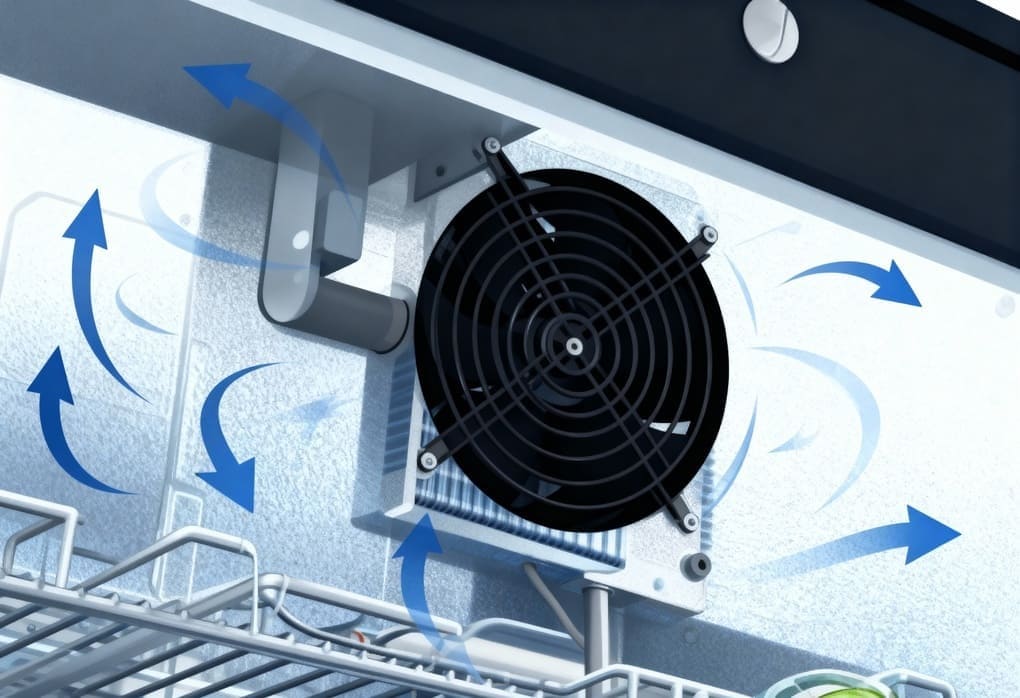
Fan-forced (dynamic) cooling is non-negotiable for any commercial bar fridge in a high-access environment. An internal fan actively circulates cold air to ensure uniform temperature across all shelves and rapid temperature recovery after door openings — the critical factor during peak service when the fridge is opened dozens of times per hour. Static cooling cannot achieve adequate recovery speed under these conditions.
Tropical Rating (T-Class)
The single most important specification for Australian venues — covered in full in the Climatic Ratings section below.
Low-E Glass
Low-E (low emissivity) glass carries a microscopically thin metallic coating that reflects infrared heat away from the cabinet. It significantly reduces condensation fogging on the exterior glass — keeping product visible and reducing the compressor load from heat ingress. Standard on mid-range and premium models; worth specifying in any glass door unit, particularly in high-humidity environments.
Self-Closing Doors and Magnetic Seals
Self-closing doors are essential in a high-volume bar where staff rarely close the fridge deliberately between service. A door left ajar causes immediate temperature spikes, increases energy draw and risks stock quality. Quality magnetic seals ensure tight closure every time — inspect these at time of purchase and replace immediately if they deteriorate in service.
LED Lighting
LED is the standard for commercial bar fridges and the only sensible choice. LED consumes up to 80% less power than fluorescent, generates negligible heat (fluorescent lighting adds measurable heat load to the cabinet interior), and lasts up to 50,000 hours. The higher upfront component cost is recovered quickly in energy savings.

Hydrocarbon Refrigerants (R290)
Modern commercial bar fridges are transitioning from HFC refrigerants to hydrocarbon R290 (propane). The difference matters for both energy costs and regulatory compliance.
| R404a (HFC) | R290 (Hydrocarbon) | |
|---|---|---|
| Global Warming Potential (GWP) | 3,922 | 3 |
| Energy efficiency | Standard | Up to 15% lower energy consumption |
| Temperature recovery | Standard | Faster pull-down and recovery times |
| Regulatory outlook | Subject to phase-down under Australian regulations | Future-proof — aligned with current and upcoming standards |
R290 is classified as mildly flammable but the charge required in commercial bar fridges is minimal and safe in commercial use. Choosing an R290 unit reduces operating costs, minimises environmental impact and future-proofs the investment against HFC regulatory phase-downs.
Climatic Ratings — The Australian Factor
A fridge’s climatic rating defines the maximum ambient temperature at which it can reliably maintain its set internal temperature. This is the specification most commonly overlooked in Australia — and the one most commonly responsible for warranty failures.
Tropical Rating (T-Class) — Required for Australia
- Designed to operate reliably in ambient temperatures up to 32°C+
- Heavy-duty components and enhanced insulation to handle Australian conditions
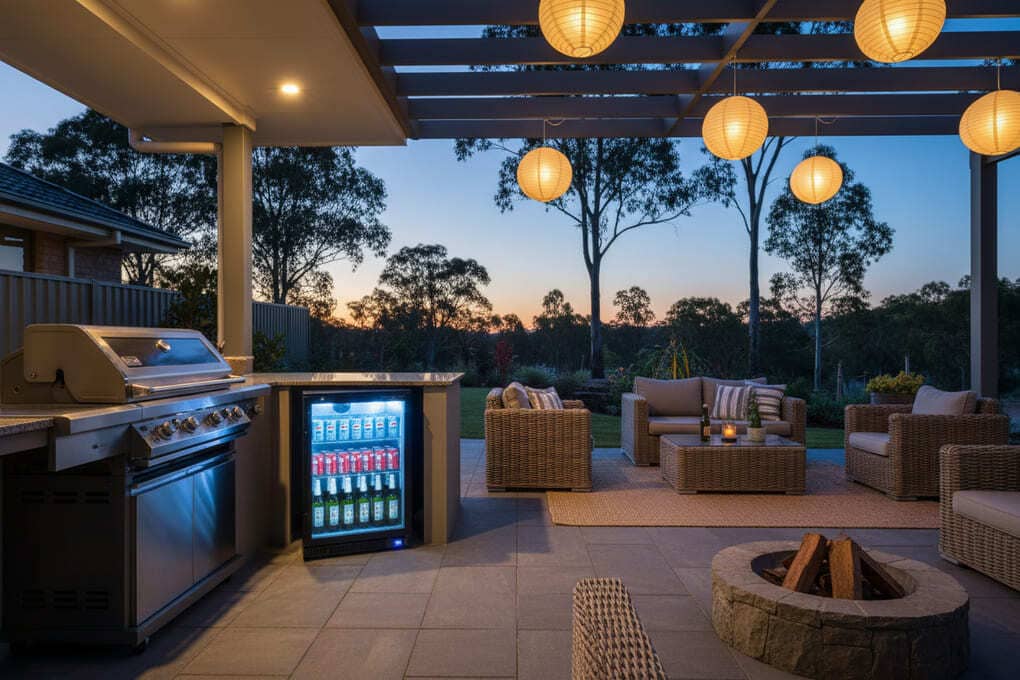
- Performs reliably in non-air-conditioned bar areas, outdoor patios and semi-covered venues
- Warranty remains valid when the unit is used in its rated conditions
- All Australian commercial bar fridge purchases should specify T-class
Standard Rating — Not Suitable for Most Australian Venues
- Designed for consistent ambient temperatures up to 25°C
- Will cause the compressor to run continuously in a warm Australian environment
- Results in thermal strain, high energy bills and premature compressor failure
- Warranty will be voided if failure occurs due to operating above rated ambient temperature
- Only appropriate for fully air-conditioned venues that can guarantee sub-25°C ambient year-round
Sizing and Capacity
Underestimating capacity is one of the most common bottlenecks in bar operations — forcing constant restocking during peak service, causing temperature spikes from excessive door openings and slowing service pace.
The capacity calculation
Peak hourly unit sales × 2 = minimum chilled bottle count
Example: A bar selling 80 drinks per peak hour needs a minimum of 160 bottles chilled and accessible at the bar position. A 3 door under-bench unit holds approximately 280–300 bottles — providing adequate buffer for variety and restocking lag. A 2 door unit at 180–200 bottles would be marginal and create a restocking problem at peak.
High-volume venues may require a continuous run of two or three under-bench units to provide sufficient access points, storage zones and capacity across a long bar. Ensure the configuration supports FIFO stock rotation — adjustable shelving allows different bottle heights to be accommodated as stock changes.
Ventilation — The Most Critical Installation Rule
Insufficient ventilation is the single biggest cause of commercial bar fridge failure in Australia. A fridge dissipates heat through its condenser coils — if that heat cannot escape, the compressor overheats and fails.

Costs and Total Cost of Ownership
Purchase price is the least useful metric for comparing commercial bar fridges. Total cost of ownership — purchase price, energy consumption, maintenance and lifespan — is the right measure.
| Price Tier | Typical Range | What You Get | Best For |
|---|---|---|---|
| Entry level | $800–$1,800 | Basic cooling, typically no T-rating or advanced efficiency features | Low-volume cafés with minimal bar service in air-conditioned environments only |
| Mid-range | $1,800–$4,000 | T-rating, fan-forced cooling, Low-E glass, quality compressor, MEPS compliant | Most Australian bars, pubs and restaurants — the best balance of cost and reliability |
| Premium | $4,000+ | R290 refrigerant, maximum energy efficiency, superior insulation, longer commercial warranty | High-volume venues, outdoor applications, operations where energy cost and longevity are the priority |
Brand Guide
| Brand | Position | Strengths | Best For |
|---|---|---|---|
| Skope | Premium | Skope engineers high-performance bar fridges for Australian conditions — powerful cooling systems, digital controls, energy-saving features, eco-friendly refrigerants and robust local service network | High-volume operations needing long-term reliability and guaranteed local support |
| Thermaster | Premium | Thermaster delivers robust build quality and advanced cooling technology — adjustable shelving, precise temperature control, energy-efficient operation built for heavy commercial use | Busy bars and restaurants requiring durable, consistent performance through continuous service |
| Williams | Mid-Range | Williams offers stylish and efficient bar fridges with excellent temperature consistency — self-closing doors, adjustable thermostats and high-density insulation | Venues prioritising reliable temperature performance and a premium appearance |
| Polar | Mid-Range | Polar supplies a practical range of bar fridges combining affordability with solid commercial features — adjustable shelves, LED lighting, robust construction | Small to medium venues wanting reliable performance without premium pricing |
| Exquisite | Value | Exquisite delivers quiet operation, advanced temperature control and energy-efficient components across compact and display configurations | High-end bars wanting elegant presentation with practical commercial performance |
Pre-Purchase Checklist
Before You Buy
- Does the unit carry a Tropical (T-class) rating for Australian ambient conditions?
- Does it use fan-forced (dynamic) cooling for fast temperature recovery?
- Does it use R290 refrigerant for lower energy consumption and future regulatory compliance?
- Is the capacity sufficient for your peak hourly sales volume with a 2× buffer?
- Is it MEPS compliant for Australian energy standards?
- Does it have self-closing doors and quality magnetic seals?
- Does it use Low-E glass to prevent condensation fogging?
- Is there a strong commercial warranty and reliable local service network?
- Can you commit to the required 100mm minimum rear ventilation clearance?
Common Buying Mistakes
Avoid These
- Buying a non-T-rated fridge for a warm bar environment — the unit will overheat, struggle to hold temperature, fail prematurely and void the warranty
- Underestimating capacity — size to your busiest hour with a 2× buffer; a fridge that runs out of chilled stock during peak service causes temperature spikes and lost sales
- Not providing 100mm rear ventilation clearance — the single biggest cause of commercial bar fridge failure; insufficient airflow causes compressor shutdown and voids the warranty without exception
- Choosing appearance over T-rating and MEPS compliance — a visually appealing but inefficient unit will generate excessive energy costs and fail early in Australian conditions
- Skipping self-closing doors in a high-volume bar — doors left ajar cause temperature spikes, increased energy draw and stock spoilage; self-closing is not optional in a busy service environment
- Storing wine long-term in a bar fridge — short-term is acceptable but long-term wine preservation requires a dedicated commercial wine fridge with proper humidity and temperature stability
Frequently Asked Questions
What temperature should a commercial bar fridge run at?
2°C–4°C is the optimal range for beverage cooling in a commercial bar fridge. This maintains drinks at a consistently cold serving temperature while staying above freezing. Set point alone is not sufficient — the unit must hold this temperature reliably under real service conditions, including high door-opening frequency and warm kitchen ambient temperatures.
Why does a bar fridge fog up?
Condensation forms when warm, humid air meets the cold glass surface — common in high-humidity environments and outdoor settings. Low-E glass significantly reduces this by reflecting heat away from the cabinet and limiting the temperature differential at the glass surface. If fogging is persistent despite Low-E glass, check that the unit has adequate ventilation and is not working harder than it should to maintain temperature.
How much ventilation does a commercial bar fridge need?
At minimum 100mm of rear clearance is required by all manufacturers. This allows the condenser to dissipate heat effectively. Insufficient clearance causes the compressor to overheat, leading to component failure and immediate warranty invalidation. For built-in installations, confirm the ventilation direction of the specific unit — some models vent from the front and can be installed in fully enclosed cabinetry; most rear-vent models cannot.
Can I store wine in a bar fridge?
Short-term, yes — a bar fridge will keep wine chilled for service. For proper long-term wine preservation, a dedicated commercial wine fridge is required. Wine fridges maintain the specific temperature range (7°C–14°C depending on variety) and humidity needed to preserve wine quality over time. A bar fridge runs too cold for long-term wine storage and lacks the humidity control that prevents cork deterioration.
Do commercial bar fridges use a lot of electricity?
A MEPS-compliant commercial bar fridge is designed for continuous operation with an efficient low-draw compressor — running costs are modest relative to the operational role the unit plays. R290 models consume up to 15% less energy than equivalent HFC units. The higher energy cost risk comes from non-compliant or poorly maintained units — a dirty condenser, a worn door seal or a unit running above its rated ambient all drive energy consumption significantly higher than a well-maintained, correctly specified model.
What is the difference between a bar fridge and an under-bench fridge?
A bar fridge is specifically designed for beverage storage and service — typically glass door for visibility, with interior lighting and shelving optimised for bottles and cans. An under-bench fridge is a solid door unit designed for ingredient storage in a kitchen prep station. Both fit under a standard bench height, but they serve different applications — a bar fridge is designed for front-of-house beverage service; an under-bench fridge is designed for back-of-house cold food storage.
Also browse: Upright Fridges · Wine Fridges · Under Bench Fridges · Open Display Fridges · Contact Us