

Factors to Consider Before Buying a Teppanyaki Plate
Choosing the right commercial teppanyaki plate involves assessing its size, material, power source, and ventilation needs to ensure it matches your menu and kitchen workflow.
Introduction
Selecting the right commercial teppanyaki plate is a critical decision for any Australian food business. It is an investment that directly influences your menu, kitchen efficiency, and customer experience. Whether you are launching a Japanese steakhouse or adding high-performance grilling to your cafe, the model you choose matters. This guide covers the essential factors to consider when buying a teppanyaki plate, from material and power source to size and setup. We will help you select a unit that will serve your business for years to come.
Key Considerations When Buying a Teppanyaki Plate
Navigating the options can be challenging. To make the best choice for your venue, focus on these core features that define performance and suitability.
Plate Material and Thickness
The cooking surface is the heart of your teppanyaki. A thick mild steel plate, typically 16-20mm, offers excellent heat retention. This is perfect for searing steaks and seafood without significant temperature drops. Thinner plates heat up faster but can develop hot spots, leading to inconsistent results. Polished chrome surfaces offer a premium look and are easier to clean, but they require non-abrasive tools to avoid scratching.
Gas vs. Electric Power Source
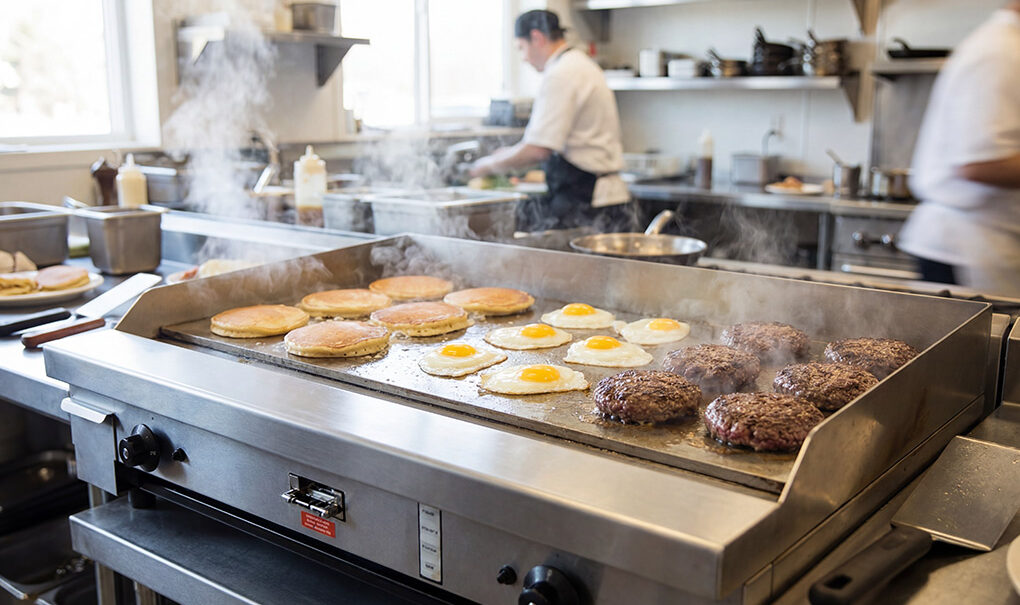
Your power source affects both performance and installation. Gas models deliver powerful, responsive heat and visible flames, making them ideal for front-of-house theatre cooking. In contrast, electric units provide more uniform heat distribution across the entire surface. This makes them a better choice for delicate items like eggs and pancakes. Electric models are often simpler to install than their gas counterparts, which require certified gas fitting.
Size and Cooking Zones
Before buying a teppanyaki plate, measure your available space and accurately forecast your production volume. Large 900mm+ units are well-suited for busy kitchens, while a compact 600mm model might be perfect for a smaller operation or as part of a line of benchtop equipment. Look for models with multiple thermostatic controls, which allow you to create different heat zones on a single plate. This lets you sear on one side while holding food on the other.
Ease of Cleaning and Maintenance
A teppanyaki plate that is difficult to clean wastes valuable staff time and can pose hygiene risks. Look for features that simplify the cleanup process. A large, easily removable grease drawer is essential. Raised splash guards and seamless, welded construction prevent food and grease from getting trapped in crevices, making daily maintenance much faster.
Common Uses for Commercial Teppanyaki Plates
A commercial teppanyaki plate is an incredibly versatile piece of cooking equipment. Here are a few scenarios where they are the perfect fit for a professional kitchen.
For Japanese restaurants, the teppanyaki plate is the main stage. A large, visually impressive gas model is ideal, as the flames and chef’s performance create a memorable dining experience. In a busy cafe, an electric countertop teppanyaki offers consistent heat for batch cooking bacon, eggs, and pancakes alongside a commercial toaster. Its quick heat-up and easy cleaning are vital for fast-paced service.
For mobile food trucks and outdoor caterers, a compact and robust gas teppanyaki is the go-to choice. It provides intense heat without needing mains power, allowing you to serve perfectly grilled food anywhere. It is also a smart solution for expanding an existing menu without a full kitchen renovation. A benchtop model can be integrated into your existing line on a stainless steel bench, giving chefs a new tool alongside their commercial deep fryers and commercial stoves.
Installation and Setup Requirements
Proper installation is crucial for safety and efficiency. Ventilation is the top priority. A teppanyaki grill produces significant heat, smoke, and grease, so it must be positioned directly under a powerful commercial exhaust canopy that meets Australian Standard AS 1668. Always consider your kitchen’s workflow. Place the unit near your prep areas and commercial upright fridges to minimise staff movement. For customer-facing setups, ensure there is a safe distance or a protective barrier between the hot surface and your guests. Finally, confirm your utility connections before delivery. Ensure you have the correct gas line or a dedicated electrical circuit with the right amperage, as many units require hardwiring by a licensed electrician.
Costly Mistakes to Avoid
Choosing the wrong teppanyaki plate can be an expensive error. Here are some common pitfalls to avoid when you are ready to make a purchase.
- Underestimating Volume: Buying a plate that is too small for your peak service will create a production bottleneck. It will lose heat quickly, leading to longer wait times and inconsistent food quality. Always size your equipment for your busiest periods.
- Ignoring Ventilation Costs: The price of the unit is only part of the investment. Failing to budget for the necessary exhaust hood and installation can blow your budget and delay your opening. Get a quote for ventilation first.
- Mismatching the Plate to Your Menu: Do not buy a thin, lightweight plate if your menu is focused on heavy steaks; it will not retain enough heat for a proper sear. It is as unsuitable as using a commercial induction cooker for flame-grilling.
- Choosing a Hard-to-Clean Model: A unit with seams, crevices, or a poorly designed grease trap becomes a daily chore. This wastes labour and can lead to serious hygiene issues over time.
Frequently Asked Questions
What is the difference between a teppanyaki plate and a standard griddle?
Commercial teppanyaki plates use much thicker steel for superior heat retention and even cooking, which is essential for performance searing. A standard griddle or commercial hot plate is a more general-purpose tool and may not hold its temperature as consistently under a heavy load.
How thick should my teppanyaki plate be?
For heavy-duty use like searing steaks, a 16mm to 20mm plate is ideal as it holds temperature very well. For lighter applications like breakfast foods or crepes, a 10mm to 12mm plate is sufficient and heats up faster.
Should I choose a gas or electric teppanyaki plate?
Gas offers intense, responsive heat and is great for theatre kitchens where visible flames add to the atmosphere. Electric models provide precise temperature control and even heating, which is better for delicate items and often simpler to install.
What kind of ventilation is required for a teppanyaki plate?
Due to the high levels of heat, smoke, and grease produced, a commercial teppanyaki plate must be installed under a certified commercial kitchen exhaust hood. This is a legal requirement in Australia to ensure fire safety and air quality.
Ready to Choose Your Teppanyaki Plate?
Buying a teppanyaki plate is a significant step towards enhancing your menu and kitchen’s capabilities. By carefully considering the plate material, power source, size, and installation needs, you can confidently select a model that delivers performance and value. From high-heat searing to delicate breakfast items, the right teppanyaki can become one of the most valuable assets in your culinary arsenal, alongside other essentials like combi ovens and commercial char grills.
If you are ready to explore your options, browse our complete range of commercial teppanyaki plates or contact the Snowmaster team today for expert advice tailored to your business needs.