

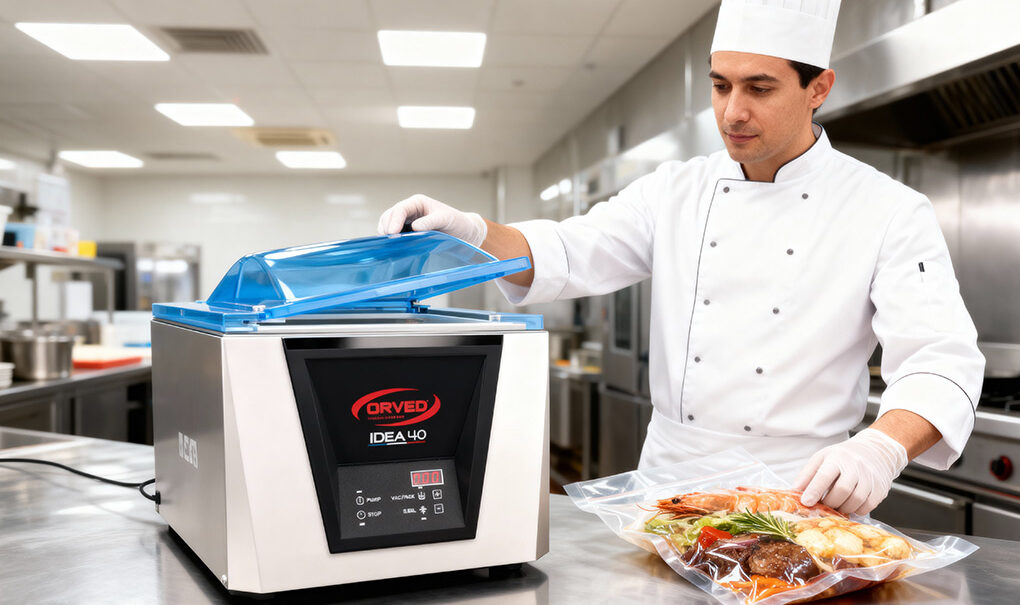
Commercial Vacuum Sealer Buying Guide 2026
Introduction to Commercial Vacuum Sealers
In Australia, commercial vacuum sealers are essential tools for food safety, storage, and packaging. They are widely used across industries such as food production, hospitality, and e-commerce, helping businesses maintain the freshness and quality of products for extended periods. This buying guide will provide all the information you need to choose the best vacuum sealer for your Australian business, including pricing, types of machines, maintenance, and financing options.
A domestic unit cannot withstand the continuous use required in a professional setting. Choosing the right commercial vacuum sealer is a decision that affects your food quality, ingredient shelf life, operational costs, and the speed of your food preparation equipment.
Too Long; Didn’t Read? Here’s the Key Info
- The core decision is Chamber vs. External. For high-volume, liquid-rich products (marinades, sauces), a Chamber Sealer is mandatory.
- Always look for a Busch Pump or equivalent German/Italian high-quality pump technology for reliable, long-term performance.
- Vacuum sealing is central to Sous Vide cooking, as it ensures flawless heat transfer and flavour infusion.
- HACCP Compliance is key; vacuum packaging extends shelf life but requires careful temperature monitoring (e.g., chilled storage).
- Top brands like Orved (Italian specialist) and Grange (robust, Australian-focused) dominate the market.
Product Spotlights: Featured Commercial Vacuum Sealers
These models from leading brands Orved and Grange offer excellent performance across benchtop and floor-standing configurations. Click the product name to view the model details:
| Brand | Product Name | SKU | Capacity / Type | Seal Bar Length (Approx.) |
|---|---|---|---|---|
| Grange | GRDZ300 Benchtop Vacuum Packer | GRDZ300 | Benchtop / External | 300mm |
| Orved | VMO0025 Chamber Sealer Evox 25 | VMO0025 | Benchtop / Chamber | 250mm |
| Grange | GRDZ400 Benchtop Vacuum Packer | GRDZ400 | Benchtop / External | 400mm |
| Orved | VMO030E Chamber Sealer Evox 30 | VMO030E | Benchtop / Chamber | 300mm |
| Grange | GRDZ500/2G Floor Standing Sealer | GRDZ500/2G | Floor Standing / External | 500mm |
| Orved | VMO0030 IDEA 30 Vacuum Sealer | VMO0030 | Benchtop / Chamber | 310mm |
Table of Contents
1. What is a Commercial Vacuum Sealer?
A commercial vacuum sealer is a specialized machine designed to remove air from a bag containing food or other items before hermetically sealing it. By creating a near-perfect vacuum, the equipment significantly inhibits the growth of aerobic bacteria and prevents freezer burn, extending product freshness by up to four times compared to conventional storage.
Commercial units differ vastly from domestic models, featuring heavier-duty stainless steel construction, continuous-duty pump technology, wider and more consistent seal bars, and superior chamber dimensions engineered for professional-grade reliability and speed.
- Key Purpose: Extend shelf life of perishable goods (meats, cheese, vegetables).
- Operational Efficiency: Allows for bulk purchasing and efficient portion control.
- Sous Vide Preparation: Creates the ideal air-free environment required for precision low-temperature cooking.
2. Types of Commercial Vacuum Sealers (Chamber vs. External)
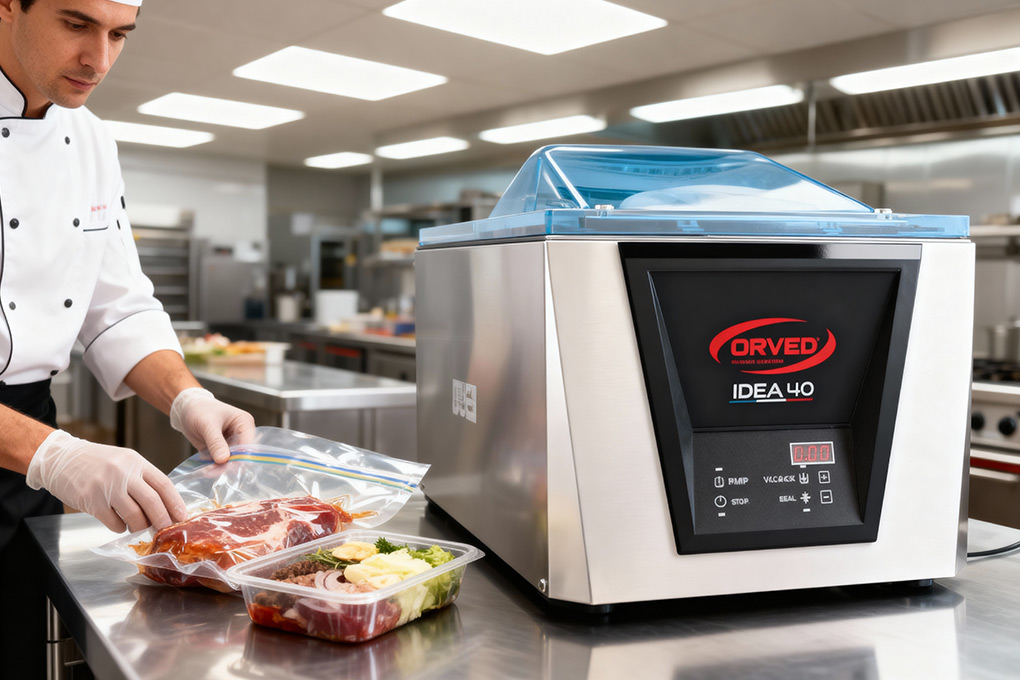
The choice between a chamber and an external (or ‘suction’) vacuum sealer is the single most important decision based on your kitchen’s needs, particularly concerning liquids. You can explore the full range of both types on our commercial vacuum sealers page.
| Feature | Chamber Vacuum Sealer | External (Suction) Vacuum Sealer |
|---|---|---|
| Operation | Entire bag is placed inside a sealed chamber. Air is removed from the entire chamber. | Only the bag opening is inserted. Air is suctioned directly from the bag. |
| Liquids/Marinades | Excellent. Liquids remain in the bag because the internal pressure is equalized. | Poor. Liquids are often sucked out of the bag and can damage the pump. |
| Cost | Higher upfront cost (due to internal pump and heavy construction). | Lower initial cost. |
| Bags Required | Uses smooth, cost-effective chamber-specific bags. | Requires textured/embossed bags, which are more expensive. |
| Best Suited To | Restaurants, butchers, food processors, high-volume catering, sous vide. | Small cafes, home users, packaging dry items only. |
3. The Engine: Understanding Vacuum Pump Technology
The pump is the most crucial, and often the most expensive, component of a commercial vacuum sealer. A low-quality pump will overheat quickly, fail under continuous use, and rarely achieve a true, deep vacuum.
In high-end European machines (like Orved), you will typically find robust oil-lubricated rotary vane pumps from manufacturers like Busch or Leybold. These pumps:
- Are designed for continuous, non-stop duty cycles.
- Achieve a deeper, more reliable vacuum (often measured in m³/h or millibar).
- Last significantly longer and are field-serviceable, offering better long-term ROI.
External sealers often use diaphragm pumps, which are suitable for intermittent use but will quickly fail if used heavily in a commercial environment.
4. Sizing and Configuration (Benchtop vs. Floor)
Choosing the correct physical configuration impacts workflow and capacity:
| Configuration | Typical Chamber Size | Operational Use |
|---|---|---|
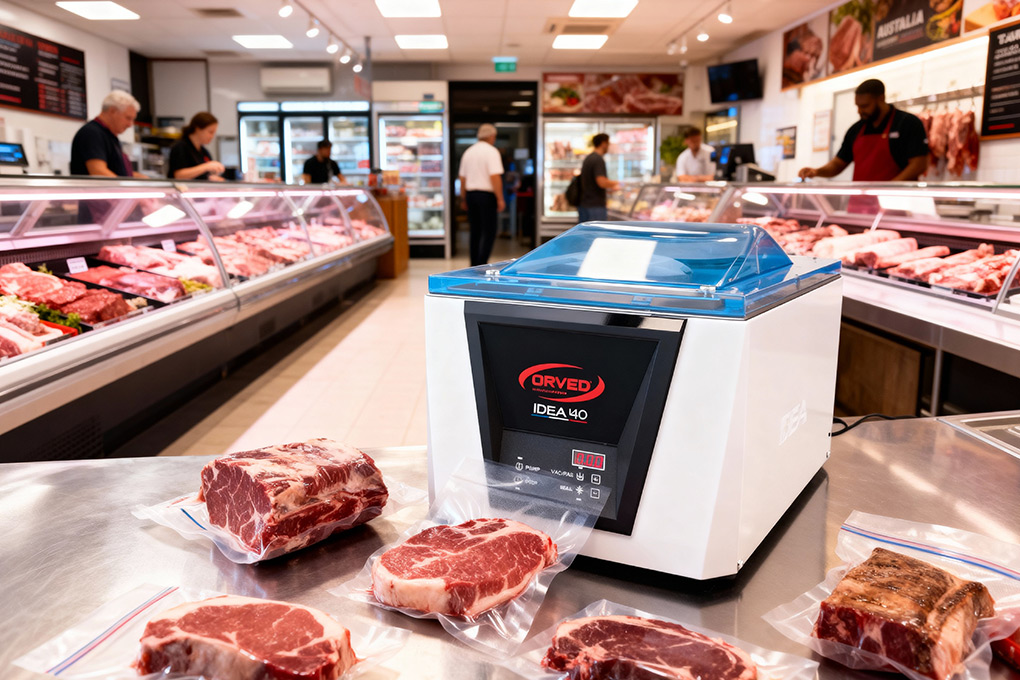
| Benchtop | 250mm to 400mm seal bar | Suitable for small to medium restaurants and cafes. Excellent for portion control and prep work (Evox 25, Grange GRDZ300). |
| Floor Standing | 500mm to 800mm+ seal bar (often double bar) | Essential for large production kitchens, butchers, and industrial processors requiring continuous, high-volume sealing of large products or multiple bags simultaneously. |
5. Key Commercial Applications (Storage, Prep & Sous Vide)
The commercial vacuum sealer drives efficiency across various kitchen operations:
- Bulk Storage and Inventory: Allows kitchens to purchase in bulk, portion out cuts of meat or cheese, and store them efficiently without product degradation.
- Cook-Chill / Cook-Freeze: Essential for large institutional kitchens and catering companies practicing cook-chill systems, ensuring meals are hygienically sealed after cooking for rapid chilling.
- Sous Vide Cooking: The foundation of this technique. Removing air allows for maximum contact between the food and the water bath, ensuring precise, even temperature control and uniform cooking.
- Flavour Infusion: The vacuum process rapidly forces marinades and curing solutions deep into the product fibers, drastically reducing marinating time.
6. Commercial Vacuum Sealer Prices in Australia
The cost of a vacuum sealer depends largely on its type, features, and intended use. Here’s a detailed breakdown:
Entry-Level Models (External Sealers)
- Price Range: $200 – $1,000.
- Recommended For: Small food businesses or home-based operations.
- Key Features: Basic functionality, easy to use, compact design.
Mid-Range Models (Chamber Sealers & Advanced External Sealers)
- Price Range: $1,000 – $3,000.
- Recommended For: Medium-sized businesses like catering companies or small food producers.
- Key Features: Faster sealing, better durability, more control over the sealing process.
High-End Models (Heavy Duty Chamber Sealers)
- Price Range: $3,000 – $5,000+.
- Recommended For: Large businesses, food processing plants, and high-volume operations.
- Key Features: High sealing speed, large chamber capacity, designed for continuous use.
7. Compliance and Certification for Vacuum Sealers in Australia
Australian businesses must comply with food safety and equipment standards. Before purchasing a commercial vacuum sealer, ensure it meets the necessary certifications.
Food Safety & HACCP:
- Food Standards Australia New Zealand (FSANZ) sets regulations for food safety. Make sure your vacuum sealer complies with FSANZ regulations for packaging food.
- Vacuum-packed products are considered potentially hazardous foods (PHF) and must be stored at or below 5°C to comply with HACCP principles.
Electrical Safety:
- All vacuum sealers should meet the necessary AS/NZS electrical compliance certifications to ensure they are safe for use in Australian commercial environments.
- Standards such as AS/NZS 3760 outline the requirement for in-service safety inspection and “test and tag” of electrical equipment in the workplace.
- Many heavy-duty chamber machines require a 400V 3 Phase connection and must be installed by a certified electrician.
Warranty and Support:
- Ensure the machine comes with a warranty that covers parts and servicing. Warranties are typically 1 to 2 years for parts and labor.
8. Maintenance and Care of Commercial Vacuum Sealers
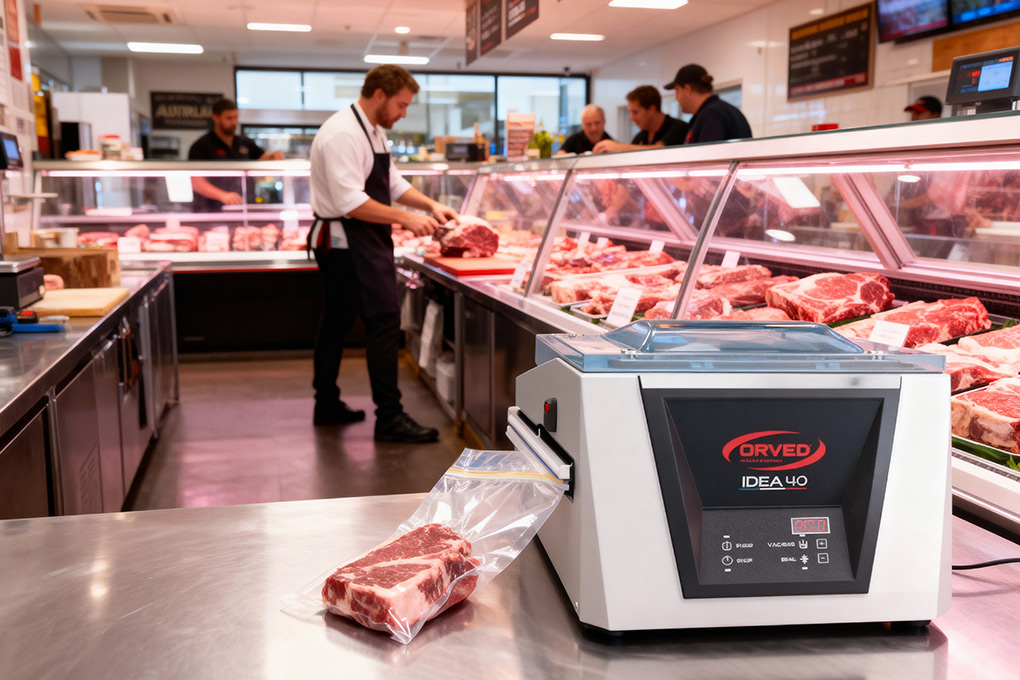
To ensure your commercial vacuum sealer operates efficiently for years, regular preventive maintenance is essential to avoid costly, unplanned downtime.
Routine Maintenance:
- Cleaning: Clean the machine regularly, especially around the sealing bars and vacuum chambers. Any food particles left inside could affect performance.
- Seal and Gasket Replacement: Seals and gaskets wear over time, leading to weak seals. Regularly inspect these parts and replace them as needed.
- Vacuum Pump Oil: For pumps utilizing oil (such as Busch rotary vane pumps), oil quality is crucial for efficiency. Check the oil level between the “MIN” and “MAX” marks on the sight glass. Change the oil if it appears dirty or has an unusual odor, or according to the manufacturer’s guidelines.
- Check for Leaks: Ensure the chamber is free of leaks. Leaks can drastically reduce the pump’s efficiency and lifespan.
- Keep it Cool: Ensure the pump is placed in an open, ventilated area, as overheating can reduce oil viscosity and cause damage.
Common Repairs:
- Replacing the Seal Bar: Over time, the seal bar may wear out and need replacing, particularly if you’re sealing high-volume packages.
- Maintaining the Pump: If the pump becomes less efficient, have it serviced to maintain the machine’s performance. Pump failures due to lack of lubrication can be irreparable or require costly repairs.
9. Leading Vacuum Sealer Brands
When investing in critical food prep equipment, brand reliability is paramount. Focus on specialized manufacturers known for pump quality and serviceability:
- Orved (Italian): A highly regarded European specialist focused almost exclusively on vacuum technology. Known for innovative features, superior pump quality, and reliability, particularly in their chamber models (Evox and VM series).
- Grange (Australian/Asian Sourced): Offers a robust, Australian-focused range covering both benchtop and high-volume floor-standing packers (GRDZ series). They are known for providing strong performance and value in heavy-duty environments.
10. Common Commercial Vacuum Sealing Mistakes to Avoid
- Using the Wrong Bags: Chamber sealers require smooth, less expensive chamber bags. External sealers require embossed/textured bags. Using the wrong type results in seal failure.
- Sealing Hot Food: Always cool food completely before sealing. Sealing hot food can breed bacteria and will introduce too much steam/moisture into the chamber/pump.
- Neglecting Pump Oil: Oil-lubricated pumps (found in most high-end chamber models) require regular oil changes. Neglecting this maintenance is the primary cause of premature pump failure.
- Overloading the Seal Bar: Sealing too many bags simultaneously or placing them too close together prevents proper heat dissipation, leading to weak seals and product spoilage.
11. Pre-Purchase Checklist
Use this checklist to ensure your new commercial vacuum sealer meets your operational demands:
- Type: Is it a Chamber model (required for liquids) or an External model (dry goods only)?
- Pump Quality: Does it feature a high-quality, continuous-duty pump (e.g., Busch)?
- Seal Bar: Is the length sufficient for your largest item/bag size?
- HACCP Plan: Are staff trained on the 5°C storage rule for sealed products?
- Configuration: Benchtop (medium volume) or Floor Standing (high volume)?
- Warranty & Service: Does the warranty cover the pump, and are local service agents available?
12. Financing Your Commercial Vacuum Sealer
A high-quality commercial vacuum sealer can be a significant upfront investment, but several financing options are available to help businesses manage the cost.
- Leasing: Leasing options let you spread out the cost over time. Many Australian vendors offer equipment leasing, such as Rent-Try-Buy agreements, which could be an attractive option for cash flow management.
- Equipment Financing: Business loans tailored to equipment purchases are available from Australian financial institutions, with competitive rates often available for commercial assets.
- Buy Now, Pay Later: Some suppliers offer buy now, pay later schemes, which can help businesses manage costs on high-end equipment.
13. Frequently Asked Questions (Technical)
Q: What is a ‘soft air’ function on a vacuum sealer?
A: The ‘soft air’ or ‘gas flushing’ function slowly reintroduces air (or an inert gas) into the chamber after sealing. This is vital for sealing delicate items (like chips, pastries, or soft cheese) to prevent the rapid pressure change from crushing them.
Q: How often should I change the oil in my chamber vacuum sealer pump?
A: For high-volume kitchens, pump oil should typically be changed every 100–200 hours of operation, or at least every 3–6 months. The oil prevents friction and wear; clean oil is essential for achieving a deep vacuum.
Q: Can I seal hot soups or liquids?
A: No. Food must be chilled to 5°C or below before vacuum sealing. Sealing hot liquids is dangerous and introduces excessive moisture/steam, which contaminates the pump and leads to pump failure and inconsistent sealing.
Q: Are the bags for sous vide the same as regular vacuum sealer bags?
A: Yes, the material (usually BPA-free plastic) is chemically the same, but for sous vide, the bag must be explicitly labeled as ‘Boil-Safe’ or ‘Cooking Grade’ to ensure they do not leach plasticizers into the food when heated in the water bath.
14. Final Expert Advice
A commercial vacuum sealer is a foundational investment in operational efficiency, waste management, and kitchen hygiene. Do not compromise on the pump quality. The minimal extra investment in a reputable brand with a quality pump (like Orved or Grange) will deliver decades of reliable service and significant ROI through reduced food spoilage and streamlined food prep workflows.
Ready to upgrade your food preservation and cooking capabilities? Explore our range of commercial vacuum sealers and food preparation equipment today.