

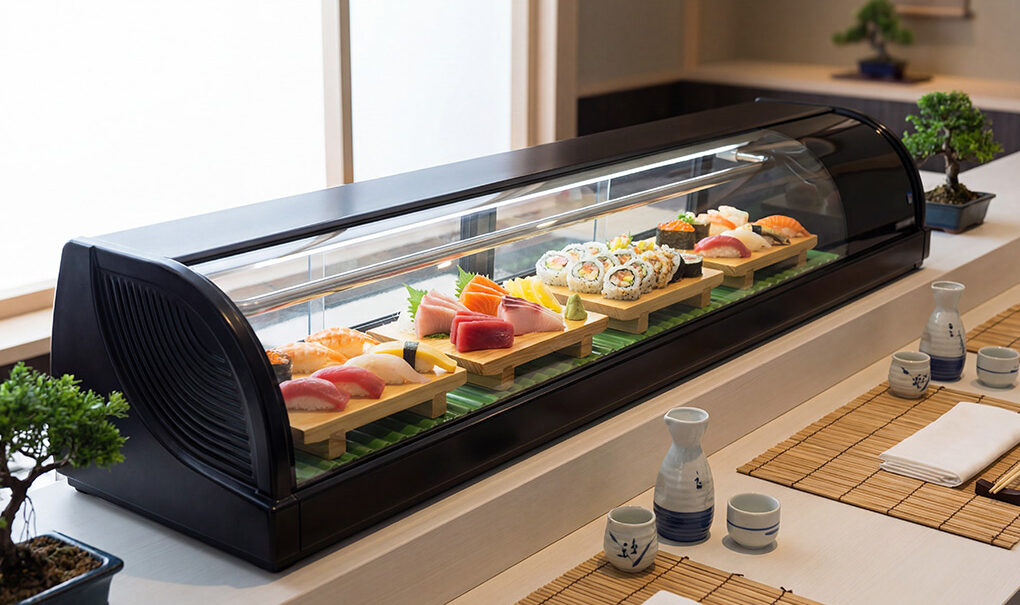
Best Sushi Display Fridge Australia: Commercial Buying Guide
- Best cooling type: Static cooling is essential for sushi to prevent rice and fish from drying out.
- Best features: LED lighting, sliding rear doors, quality glass display, correct ventilation and easy cleaning access.
- Best applications: Sushi bars, Japanese restaurants, hotel buffets, takeaway sushi shops and premium seafood display.
- Buying tip: Never use a standard fan-forced deli fridge as a substitute for a sushi display fridge.
If you are searching for the best sushi display fridge, choosing the right model can directly affect food safety, product presentation and customer confidence. Sushi is one of the most delicate food categories in hospitality, and using the wrong refrigeration system can quickly damage both appearance and quality.
A quality commercial sushi display fridge does more than keep food cold. It preserves moisture, enhances presentation and allows customers to see freshness in real time. Whether you run a sushi bar, Japanese restaurant, café or hotel buffet, choosing the right unit matters.
This guide explains how to choose the best sushi display fridge for your venue, what features matter most and the mistakes to avoid.
What Makes the Best Sushi Display Fridge?
Static Cooling System
The best sushi display fridge uses static refrigeration rather than fan-forced cooling. This protects delicate sushi rice and raw fish from drying out.
Premium LED Lighting
Cool LED lighting improves presentation without adding unwanted heat to the cabinet.
Rear Sliding Doors
Quick access for chefs allows easy restocking and smoother service during busy periods.
Easy Cleaning Design
Removable trays and accessible surfaces simplify cleaning and food safety compliance.
Best Sushi Display Fridge for Different Business Types
| Business Type | Recommended Sushi Display Fridge |
|---|---|
| Sushi Bar | Countertop premium curved glass sushi display fridge |
| Japanese Restaurant | Mid to large static cooled sushi fridge with LED lighting |
| Takeaway Venue | Compact sushi display fridge with customer-facing visibility |
| Hotel Buffet | Large capacity premium sushi display fridge |
| Fusion Restaurant | Multi-purpose cold seafood display unit |
Why Static Cooling Is Essential in the Best Sushi Display Fridge
The biggest difference between a sushi display fridge and a standard commercial fridge is the cooling system.
Most general refrigeration units use fan-forced air. While this works well for packaged products, drinks and many food categories, it is unsuitable for exposed sushi. The circulating dry air removes moisture quickly, causing rice to harden and fish to lose visual freshness.
Choosing the Best Sushi Display Fridge Size
Size should match realistic peak demand, not idealised volume.
A small venue with limited sushi output may only need a compact display model. Larger restaurants with active sushi chefs may require significantly larger units.
Before Buying
- Measure available counter space
- Check power outlet access
- Confirm compressor side location
- Allow ventilation clearance
- Estimate realistic peak service stock
Common Mistakes When Choosing the Best Sushi Display Fridge
Avoid These
- Buying a deli display fridge instead – fan cooling damages sushi quality
- Choosing the wrong size – oversized units waste energy, undersized units overcrowd product
- Ignoring cleaning access – poor maintenance leads to hygiene issues
- Placing near heat sources – nearby cooking equipment reduces cooling efficiency
- Choosing poor lighting – weak presentation reduces product appeal
Best Sushi Display Fridge Placement Tips
Correct placement protects performance and improves presentation.
Install your sushi display fridge on stable customer-facing counters such as stainless steel benches, away from nearby heat-generating equipment like commercial cooktops.
Australian food businesses should also follow food handling guidance from the Food Standards Australia New Zealand.
Energy Efficiency and Running Costs
Energy use matters in hospitality, especially for refrigeration operating continuously.
Look for efficient compressors, quality insulation and LED lighting. The Australian Government energy resources provide useful guidance on efficiency and operational savings.
Frequently Asked Questions About the Best Sushi Display Fridge
What is the best sushi display fridge cooling system?
Static cooling is considered the best system because it maintains humidity and prevents sushi from drying out.
Can I use a deli display fridge for sushi?
No. Most deli display fridges use fan-forced cooling, which dries out sushi and reduces product quality.
What temperature should a sushi display fridge run at?
Most sushi display fridges should operate between 1°C and 4°C to maintain freshness and food safety.
Is a sushi display fridge only for sushi?
No. Many venues also use them for sashimi, oysters, seafood appetisers and premium chilled presentation items.
How often should a sushi display fridge be cleaned?
Glass surfaces should be cleaned daily, with a deeper internal clean performed weekly.
Browse Sushi Display Fridges →
Also browse: Cold Food Displays · Commercial Fridges · Contact Us