

Your Ultimate Guide to Buying a Pizza Prep Fridge in 2026
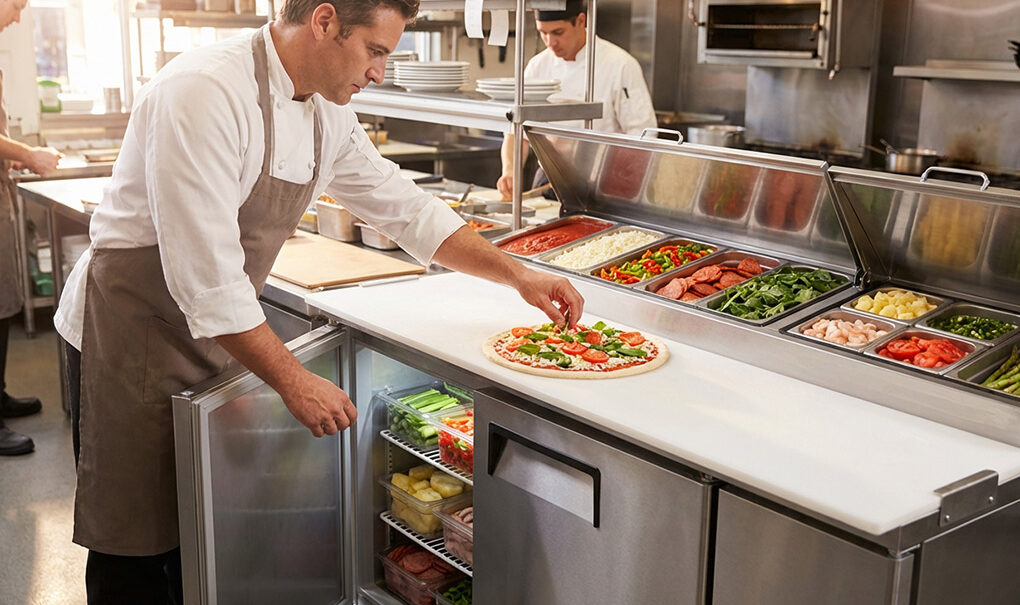
- Three-in-one unit: A pizza prep fridge combines refrigerated base storage, a covered topping rail and a dedicated prep surface — the production line anchor for any pizzeria or kitchen with a pizza menu.
- Size to volume: A small café may manage with a 250-litre unit; a busy restaurant should look at 500 litres or more. Undersizing is the most common and costly mistake.
- Marble vs stainless steel top: Marble stays naturally cool and prevents dough sticking — preferred by traditional pizza makers. Stainless steel is more durable, easier to sanitise and more practical for high-turnover kitchens.
- Ventilation is non-negotiable: Allow 10–15cm clearance at the back and sides. A unit pushed against a wall will overheat, consume more power and fail prematurely.
- Food safety compliance: The refrigerated base and topping rail must maintain 1°C–4°C under Standard 3.2.2. A covered topping rail is required — open rail designs do not meet temperature control requirements during service.
For any pizzeria or restaurant, the pizza prep fridge is the anchor of the production line. It combines refrigerated base storage, an accessible topping rail and a dedicated prep surface into one unit — replacing what would otherwise require separate refrigeration, a preparation bench and a mise en place station. A well-specified unit streamlines workflow, supports food safety compliance and keeps output consistent during the busiest services. The wrong choice creates bottlenecks, wasted ingredients and constant restocking mid-shift.
This guide covers everything you need to specify the right pizza prep fridge for your operation — from volume and surface material through to layout placement and compliance. Browse Snowmaster’s full range of pizza prep fridges to see all available configurations.
Choosing by Business Type
High-Volume Pizzeria
A pizzeria serving hundreds of covers per night needs a three or four-door model with a large refrigerated base for dough trays and bulk ingredients. The topping rail should be wide enough to hold numerous gastronorm pans, keeping all toppings organised and within reach without restocking during service. Specify a unit with 500 litres or more of refrigerated base capacity.
Café or Restaurant with a Pizza Menu
Where pizza is a popular menu item but not the sole focus, a two-door model typically provides the right balance of storage capacity and prep surface without consuming excessive floor space. These units suit a steady flow of orders while fitting neatly into a multi-purpose kitchen line alongside other equipment.
Food Truck or Catering Operation
Space and durability are the primary considerations in a mobile setting. A compact single-door or under-bench model on heavy-duty castors is generally the right choice. Prioritise robust construction and a refrigeration system capable of maintaining temperature in varying ambient conditions — mobile kitchens experience far greater temperature variation than fixed commercial kitchens.
Key Features to Specify
Capacity
Size to your peak service volume, not your average. A small café may manage with a 250-litre unit; a busy restaurant should specify 500 litres or more. Undersizing forces constant restocking during service and leads to over-stuffing the refrigerated base — which compromises temperature maintenance and food safety compliance under Standard 3.2.2.
Work Surface — Marble vs Stainless Steel
Marble Top
- Stays naturally cool — prevents pizza dough from sticking during shaping
- Traditional preference for artisan and Neapolitan-style pizza operations
- Susceptible to chipping if heavy equipment is placed on it
- Requires more care during cleaning — some chemicals can stain or etch marble
- Best for: Dedicated pizzerias, artisan-focused operations, high dough volume
Stainless Steel Top
- More durable and resistant to chips, cracks and heavy use
- Easier to sanitise — compliant with Standard 3.2.3 food-contact surface requirements
- Matches stainless steel benches in a modern kitchen line
- Higher-turnover kitchens benefit from the lower maintenance demands
- Best for: Multi-use kitchens, high-turnover operations, venues prioritising hygiene and durability
Refrigeration System and Compressor Position
The compressor position affects both maintenance access and kitchen layout. A side-mounted compressor is generally easier to access for cleaning and servicing but adds to the unit’s overall width — a consideration in tight kitchen runs. A rear-mounted compressor saves width but requires more clearance from the wall for ventilation. Both configurations require adequate airflow — see the ventilation section below.
Topping Rail
A refrigerated, covered topping rail is non-negotiable for food safety compliance. Under Standard 3.2.2, cold food must be held at 5°C or below — an uncovered rail exposed to kitchen heat will not maintain this temperature during a busy service. Check the number of gastronorm pans the rail holds and whether the depth suits your standard pan sizes. A raised rail offers better ergonomics and physical separation from the main prep surface — useful when working with ingredients prepared in commercial food processors.
Energy Efficiency
A pizza prep fridge runs 24 hours a day, seven days a week. Energy consumption directly impacts your operating costs across the life of the unit. Look for models with LED interior lighting, self-closing doors and a good Energy Efficiency Index (EEI) rating under the Australian government’s commercial refrigeration standards introduced in May 2021. A more efficient unit costs less to run every single day — that difference compounds significantly over a five to seven year equipment lifespan.
Kitchen Layout and Placement
Where you place your pizza prep fridge matters as much as which model you choose. For maximum efficiency, position it as part of a linear production flow — ideally between your dough preparation area (near your pizza dough roller or spiral mixer) and your commercial pizza oven. This creates a smooth base-to-topping-to-cooking sequence without staff crossing back through the kitchen during service.
Common Buying Mistakes
Avoid These
- Undersizing for peak volume — buying to current average demand rather than peak service creates a bottleneck from day one; a cramped workspace and constant restocking mid-shift are the result
- Ignoring ventilation requirements — placing a unit in a tight alcove without adequate clearance is the most common cause of premature compressor failure; factor clearance into your layout before purchasing
- Choosing an open topping rail — an uncovered topping rail will not maintain 5°C during a busy service in a hot kitchen; a covered, refrigerated rail is required for Standard 3.2.2 compliance
- Overlooking cleaning access — a pizza prep station accumulates flour, sauce and oil quickly; units with hard-to-reach corners, complex assemblies or non-removable components create a daily cleaning problem; look for coved corners and removable pans and dividers
- Not cleaning condenser coils — coils should be cleaned every 90 days minimum, more frequently in high-grease environments; clogged coils reduce cooling efficiency and accelerate component wear
Frequently Asked Questions
What is the ideal temperature for a pizza prep fridge?
The refrigerated base should be maintained between 1°C and 4°C to store dough, dairy and proteins safely under Standard 3.2.2. The topping rail must also hold ingredients at 5°C or below during service. If either zone drifts above 5°C during a busy service, the unit is either undersized for the ambient conditions or requires servicing.
Can a pizza prep fridge be used for sandwiches or salads?
Yes — the combination of refrigerated base storage, a covered topping rail and a flat prep surface makes pizza prep fridges well-suited for sandwich bars, salad stations, burrito lines and any prep application requiring cold ingredient access and a dedicated workspace. Many cafés and multi-use kitchens use them as the primary cold prep station regardless of whether they serve pizza.
How often should I clean the condenser coils?
Every 90 days at minimum — more frequently in kitchens with high grease or flour in the air, which blocks coils faster. Clogged condenser coils prevent the unit from cooling efficiently, increase energy consumption and accelerate compressor wear. Add condenser coil cleaning to your quarterly maintenance schedule alongside temperature logging and door seal inspection.
What is the difference between a marble and a stainless steel top?
A marble top stays naturally cool and prevents pizza dough from sticking during shaping — the traditional preference for artisan pizza operations. A stainless steel top is more durable, resistant to chips and scratches, and easier to clean and sanitise, making it the more practical choice for high-turnover kitchens. The right choice depends on your dough handling volume and how much you prioritise surface temperature versus durability and hygiene.
How many doors do I need on a pizza prep fridge?
Match the number of doors to your base storage requirements. A two-door model suits most cafés and restaurants with a pizza menu — it provides sufficient dough tray and ingredient storage without an oversized footprint. A three or four-door model is required for high-volume pizzerias storing multiple dough batches, bulk sauce and large ingredient volumes simultaneously. Always consider how many gastronorm trays you need to store flat, as this determines the internal configuration you require.
Snowmaster stocks pizza prep fridges in two-door, three-door and four-door configurations with marble and stainless steel top options — available for delivery across Australia. Our team can help you match the right unit to your kitchen layout and production volume.
Also browse: All Commercial Fridges · Commercial Pizza Ovens · Pizza Dough Rollers · Spiral Mixers · Contact Us