

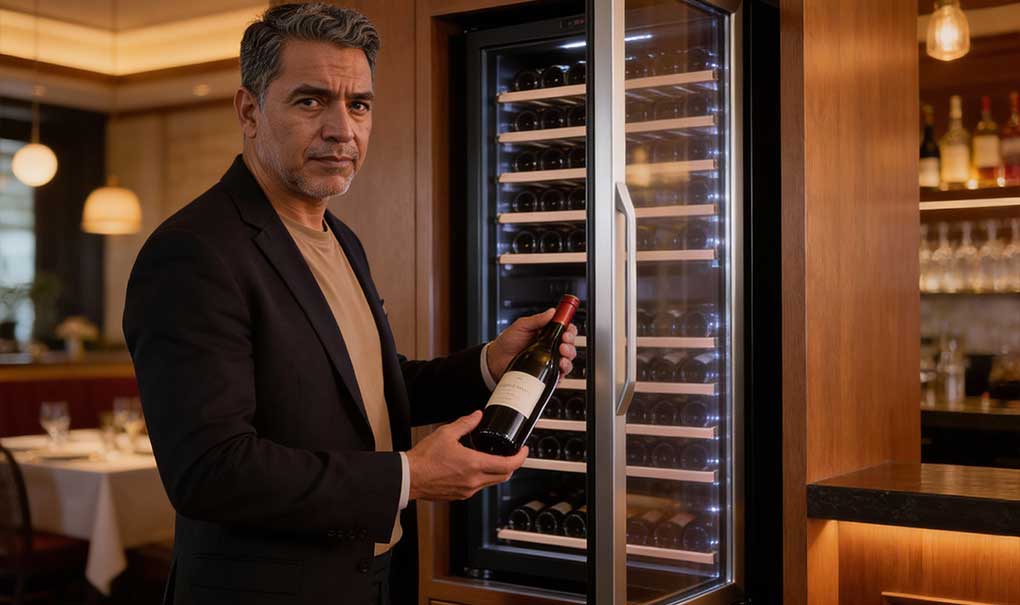
Commercial Wine Fridges Australia: 2026 Buyer’s Guide
- Dual-zone vs single-zone: Dual-zone suits venues serving both reds and whites by the glass; single-zone set around 13°C works for general mixed storage.
- Capacity: Advertised bottle counts are based on standard Bordeaux bottles — allow extra capacity if you stock Burgundy or Champagne bottles.
- Ventilation: Front-venting units can be built into cabinetry; rear-venting units need clearance. Ignoring this is the most common cause of premature compressor failure.
- Placement: Keep away from heat-producing equipment and direct sunlight — both force the compressor to work harder and increase running costs.
- Not a substitute: A wine fridge is not suitable for food storage or cold beverage service — it runs warmer than a bar fridge by design.
Choosing the Right Commercial Wine Fridge
Selecting the right commercial wine fridge is a critical decision for any Australian hospitality business. The right model protects a valuable asset, presents your collection professionally, and streamlines service during busy periods. It is not just about chilling bottles — it is about stable temperatures, the right storage layout, and a finish that suits front-of-house or back-of-house use.
Whether you manage a busy city bar, a boutique hotel or a fine dining restaurant, temperature control, capacity, ventilation and energy efficiency should guide your choice. For broader cold storage requirements, also explore our full range of beverage equipment and commercial fridges.
When to Use a Commercial Wine Fridge
The best commercial wine fridge for your business depends on how you serve wine, your available space, and how many bottles need to be accessible at any time.
Fine Dining Restaurant
Presentation and preservation are top priorities. A dual-zone, glass-door unit is ideal for venues serving both reds and whites by the glass. UV-tinted glass reduces light exposure while showcasing premium labels. Compare with a commercial upright fridge for general cold storage requirements.
High-Volume Pub or Bar
Speed and capacity matter most. A larger single-zone model suits popular house wines and handles frequent openings. A compact footprint similar to an under-bench fridge can work well at a bar station, provided the unit is rated for wine temperature ranges.
Boutique Hotel or Café
Aesthetics and noise levels are often decisive in customer-facing areas. A slim, stylish unit with quiet compressor technology suits venues where the wine fridge doubles as a display feature — similar to how a cake display fridge supports impulse purchases through visibility and presentation.
Bar Fit-Out
A well-chosen wine fridge can complement a modern bar alongside a commercial bar fridge. Position it where customers can see it without interrupting staff movement to support upsells and improve perceived value.
Key Features to Consider
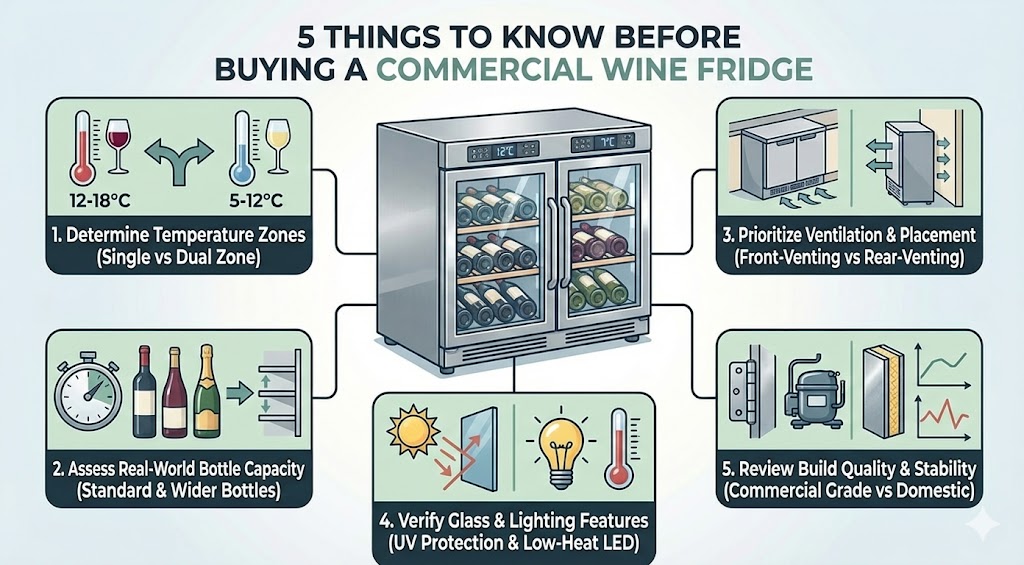
Temperature Zones: Single vs Dual
If you have a diverse wine list, a dual-zone fridge allows separate temperature control for reds and whites in the same cabinet. If you offer a smaller selection, a single-zone unit set around 13°C is an efficient option for general storage and service readiness.
Single Zone
- One temperature throughout the cabinet
- Set around 13°C for mixed red and white storage
- Simpler and more cost-effective
- Suits venues with a smaller or single-style wine list
- Best for: Pubs, bars, cafés, venues with limited wine variety
Dual Zone
- Separate temperature control for two sections
- Typically 12–18°C for reds, 5–12°C for whites and sparkling
- Ideal for by-the-glass wine programs
- Suits venues serving a full wine list across styles
- Best for: Fine dining, wine bars, boutique hotels
Real-World Bottle Capacity
Advertised capacity is based on standard Bordeaux-style bottles. If you stock wider Burgundy or Champagne bottles, usable capacity will be lower. Look for adjustable or removable shelves so you can reconfigure spacing to accommodate your full range and protect bottle labels.
Ventilation Requirements
Confirm whether the model is front-venting or rear-venting. Front-venting units can be integrated into cabinetry for a clean finish. Rear-venting units require clearance around the back and sides for heat dissipation. Poor ventilation increases energy use and can shorten compressor life significantly.
Glass and Lighting
UV-tinted glass or solid doors reduce light exposure that can affect wine quality over time. Low-heat LED lighting provides visibility without adding unnecessary warmth inside the cabinet.
Build Quality and Temperature Stability
Commercial models must handle frequent access and warmer ambient conditions than residential settings. Prioritise strong door seals, reliable compressors and insulation that supports stable internal temperatures — especially for front-of-house placement.
Placement and Setup
For front-of-house placement, position the unit where customers can see it without interrupting staff movement. A well-presented wine display supports upsells and improves perceived value.
For all placements, avoid direct sunlight and keep the unit away from heat-producing equipment such as combi ovens or commercial cooktops. Extra ambient heat forces the compressor to work harder and increases running costs. Ensure the cabinet is level so door seals properly — this reduces vibration and helps prevent temperature fluctuations.
Common Mistakes to Avoid
Avoid These
- Using a domestic fridge — residential fridges are not designed for commercial conditions; frequent openings and higher ambient temperatures cause temperature fluctuations that risk wine quality
- Ignoring ventilation clearance — placing a rear-venting unit too close to a wall traps heat and forces the compressor to run continuously, causing premature failure
- Fixed narrow shelving — if you stock Champagne or Burgundy bottles, fixed shelving may not accommodate them; always choose adjustable shelves
- Prioritising price over quality — poor insulation, temperature fluctuations and missing UV protection cost more in the long run through spoilage and equipment replacement
- Placing near heat sources — positioning next to cooking equipment or in direct sunlight increases compressor load and energy costs significantly
Frequently Asked Questions
What is the ideal temperature for a commercial wine fridge?
For dual-zone units, a common target is 12–18°C for reds and 5–12°C for whites and sparkling. For single-zone cabinets, many venues use a cellar-style setting around 13°C as a practical compromise for mixed storage.
What is the difference between a wine fridge and a beverage centre?
A wine fridge is designed for wine preservation with controlled temperature ranges, bottle-friendly shelving and UV-tinted glass. A beverage centre is typically designed to run colder for beer and soft drinks and uses flat shelving.
Are wine fridges worth it for hospitality businesses?
Yes, in most cases. Stable storage protects wine quality, reduces wastage and improves service speed. A well-presented wine display can also increase perceived value and support upsells, especially in customer-facing areas.
How often should I clean my commercial wine fridge?
Wipe down the interior monthly to prevent odours and mould. Every 3–6 months, clean the condenser coils and check door seals. This maintains efficiency and temperature stability.
Can I store beer and soft drinks in a wine fridge?
You can, but it is not ideal. Wine fridges run warmer than dedicated beverage or bar fridges, so drinks may not reach the serving temperature customers expect. For colder beverage storage, use a dedicated commercial bar fridge.
Can a wine fridge be used as a normal fridge?
Not recommended. Wine fridges are built for wine temperature ranges and bottle storage, not food-safe refrigeration temperatures for perishable items. For general food storage, use a commercial upright fridge designed for food compliance.
What bottle capacity should I choose?
Choose based on your service volume and bottle mix. If you carry Champagne and Burgundy bottles, allow extra capacity buffer and prioritise adjustable shelving. Most venues choose a unit that comfortably holds more than their usual service stock to avoid overcrowding during busy periods.
Do commercial wine fridges use a lot of electricity?
Energy use depends on cabinet size, insulation, ventilation and ambient temperature. Correct sizing, placement away from heat sources and maintained ventilation clearance all reduce running costs over time.
Snowmaster stocks commercial wine fridges for Australian bars, restaurants, hotels and cafés. Our team can help you match the right capacity, zone configuration and placement to your venue.
Browse Commercial Wine Fridges →
Also browse: Commercial Bar Fridges · Commercial Upright Fridges · Beverage Equipment · Contact Us