

How To Choose A Commercial Wok Burner: Restaurant Technical Guide
Quick Summary
- Burner type: Chimney burners for intense, concentrated heat or duckbill burners for broader, even flame distribution
- Cooling system: Low-maintenance waterless (air-cooled) systems vs water-cooled designs built for continuous production lines
- Ring count: How to map out your kitchen line requirements based on the number of active cooks per shift.
- BTU output: Understanding heavy-duty energy loads (80,000 to 200,000+ BTU) and verifying your gas supply infrastructure
- Installation: Vital commercial checklists including licensed gas fitters, specific bench cut-outs, and high-capacity ventilation canopy rules
- Top brands: Evaluating structural differences across Australian-engineered engineering lines and value-focused setups
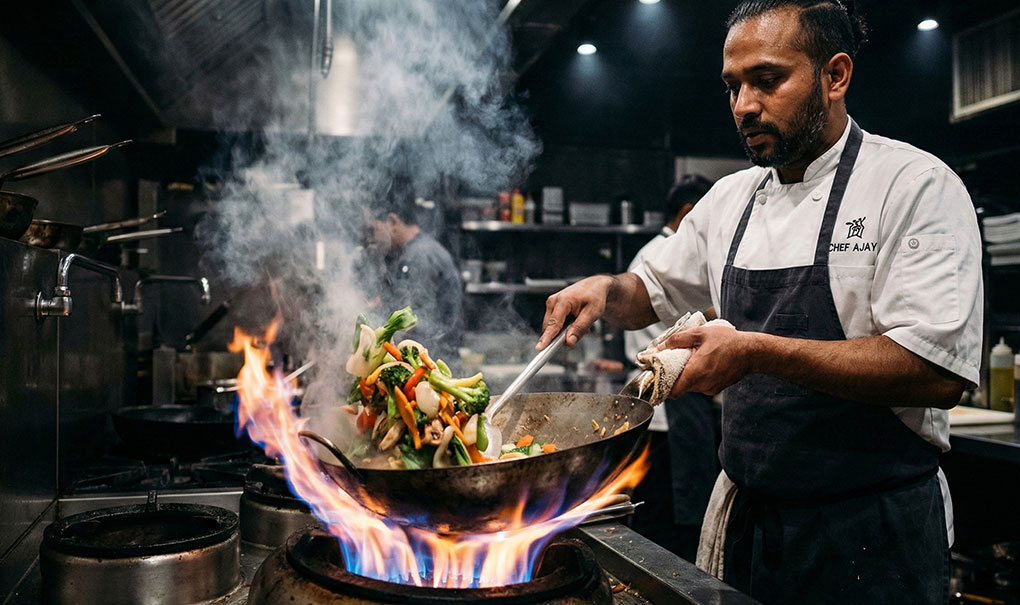
A wok burner is unlike any other piece of cooking equipment. It operates at heat levels — often exceeding 150,000 BTU — that standard cooktops cannot approach, and that intensity is not incidental to the cooking process, it is the cooking process. The characteristic flavour of wok hei — the smoky, slightly charred quality that defines great stir fry, fried rice and Chinese-style dishes — is only achievable at temperatures that require a purpose-built wok burner.
This guide covers the key decisions: burner type, cooling system, ring count, BTU requirements, installation, brands and maintenance. All models referenced are available to purchase through Snowmaster’s commercial wok burner range.
Chimney vs Duckbill Burners: Matching Heat to Menu Style
The burner configuration dictates how flames interact with your cookware, impacting both dish style and cooking speed.
Chimney Burner
- Flame is directed upward through a central chimney, concentrating intense heat at the base of the wok
- Produces the highest temperatures at the wok’s contact point — ideal for wok hei
- Better for rapid high-heat cooking: stir fry, searing, flash-cooking proteins
- Less even heat distribution across the wok sides compared to duckbill
- The preferred choice for most Chinese restaurant wok stations
- Best for: Stir fry, fried rice, high-heat Chinese cooking, maximum wok hei
Duckbill Burner
- Flame spreads outward in a flattened pattern, distributing heat more broadly across the wok base and lower sides
- More even heat distribution — better for soups, broths, sauces and larger volume cooking
- Slightly lower peak temperature at the wok base compared to chimney
- More forgiving for less experienced wok cooks
- Well suited to multi-purpose wok stations cooking a variety of dish types
- Best for: Soups, braised dishes, noodle dishes, multi-purpose Asian cooking
Waterless vs Water-Cooled: Heat Management Infrastructure
Wok burners generate enormous heat — Choosing how your station cools down changes your plumbing and installation blueprints
Waterless (Air-Cooled)
- Utilises open air-circulation channels to dump ambient heat without structural plumbing needs.
- Simplifies installation, eliminating continuous water supply pipes, dedicated drains, or line scale buildup
- Best for: Standard kitchen lease footprints, food trucks, and venues without massive pre-existing drainage paths.
Water-Cooled
- Runs a continuous sheet of flowing tap water across the cooktop face to actively absorb operational heat.
- Protects the cook and the bench frame during long, unbroken service periods under maximum thermal load.
- Best for: Massive banquet venues, high-intensity operations, and kitchens running burners 12+ hours a day
Ring Count: Sizing your line capacity
Each ring is an independent wok burner position. The number of rings determines how many woks can be operated simultaneously from a single unit.
| Station Layout | Kitchen Throughput Profile | Operational Sizing Rule |
|---|---|---|
| 1 Ring Station | Low-volume cafes, food truck setups, supplementary line extensions. | Designed for a single cook handling occasional orders. |
| 2 Ring Station | Standard high street Asian restaurants, busy lunch venues | The industry baseline for two independent line cooks |
| 3 Ring Station | High-volume kitchens, constant concurrent dine-in/takeaway orders. | Provides a dedicated overflow ring for stocks or prep. |
| 4 Ring Station | Large banquets, hotels, high-capacity catering institutions. | Built for multi-chef production lines running concurrently. |
BTU Output and Gas Supply
BTU (British Thermal Units) is the measure of heat output per hour. Wok burners operate at heat levels that are in a completely different category to standard cooktops, which typically produce 15,000–30,000 BTU per burner. Wok burners range from 80,000 BTU on compact single-ring units to 200,000+ BTU on high-output commercial models.
This heat output has two important implications for your installation:
- Gas supply capacity: Your gas supply line must be able to deliver sufficient volume and pressure to run the burner at full output. A 3 or 4-ring wok range at full capacity can exceed the supply capacity of a standard commercial kitchen gas line — always have a licensed gas fitter assess your supply before purchasing
- Ventilation: The volume of heat, combustion gases and cooking smoke produced by a wok burner at full output is substantially greater than a standard cooktop — your exhaust canopy must be adequately sized and positioned directly above
Installation Requirements
Pre-Installation Checklist
- Licensed gas fitter — mandatory for all gas appliance connections in Australia; AS/NZS 5601 compliance required
- Gas supply assessment — confirm your supply line pressure and flow capacity can support the burner’s BTU rating at full output, especially for multi-ring units
- Gas type — confirm natural gas or LPG; most models support both but require correct jet configuration at installation
- Wok station bench — wok burners require a purpose-built bench with a correctly sized cut-out; confirm bench dimensions match the unit before ordering
- High-capacity exhaust canopy — positioned directly above with sufficient capture velocity for wok cooking smoke and steam; standard kitchen canopies are often undersized for dedicated wok stations
- Water connection — required for water-cooled models only; confirm plumbed supply and drainage are available at the wok station location
- Clearances — maintain required clearances from combustible surfaces and adjacent equipment per manufacturer specifications
Brand Guide
| Brand Class | Structural Engineering Focus | Primary Application | |
|---|---|---|---|
| Premium Tier | Australian-engineered platforms, massive structural frames, local service footprints | High-output venues prioritizing structural long-term longevity. | |
| Mid-Range Tier | Versatile multi-burner options, heavy components, balanced price points. | Established restaurants requiring solid daily reliability. | |
| Value Tier | High-utility configurations, space-saving layouts, competitive entry costs. | Startups, food vans, and kitchens needing flexible setups. | |
Common Buying Mistakes
Avoid These
- Underestimating gas supply requirements — wok burners consume gas at a rate that can exceed a kitchen’s existing supply capacity; always have a licensed gas fitter assess your line before purchasing a multi-ring unit
- Installing under an undersized exhaust canopy — a standard kitchen canopy is often insufficient for dedicated wok cooking; inadequate ventilation creates a health and safety risk and will cause the rangehood to fail inspection
- Choosing ring count based on current volume — if your restaurant is growing, size up; adding a second wok unit later is far more disruptive and expensive than starting with the right capacity
- Ignoring bench cut-out dimensions — wok burner units require a precisely sized cut-out in the bench; confirm bench and unit dimensions match before ordering
- Using a standard cooktop wok ring as a substitute — a domestic or standard commercial wok ring produces a fraction of the BTU output of a dedicated wok burner; the cooking results are not comparable
Maintenance
Wok burners operate at extreme temperatures and accumulate carbonised food and grease rapidly. Consistent cleaning is essential both for performance and safety.
After Every Service
- Brush out the burner ring and surrounding area while still warm to remove food debris and grease buildup
- Wipe down the drip tray and surrounding bench surface
- Check the pilot light or ignition system is functioning correctly
Weekly
- Remove and clean the burner ring thoroughly — blocked burner ports reduce BTU output and cause uneven flame distribution
- Clean the wok support ring and any removable components with a commercial degreaser
- Inspect gas connections and flexible hoses for wear or damage — replace immediately if cracking or deterioration is visible
- On water-cooled models, check water connections for leaks and confirm flow is unobstructed
Frequently Asked Questions
What is the difference between a chimney burner and a duckbill burner?
A chimney burner directs flame upward through a central chimney, concentrating intense heat at the base of the wok — ideal for stir fry and wok hei. A duckbill burner spreads flame outward in a broader pattern, distributing heat more evenly across the wok base and lower sides — better suited to soups, broths and multi-purpose cooking. Most dedicated Chinese restaurant wok stations specify chimney burners.
What does waterless mean on a wok burner?
Waterless (also called air-cooled) means the burner uses air circulation rather than a water cooling circuit to manage heat buildup in the burner body. This simplifies installation significantly — no water supply or drainage connection is required at the wok station. The majority of commercial wok burners sold in Australia are waterless models and suit standard restaurant service hours comfortably.
How many wok burner rings do I need?
One ring per wok cook working simultaneously on your line is the standard rule. A single-ring unit suits smaller operations or supplementary wok stations. Most busy Chinese and Asian restaurants run 2-ring units as their standard wok station, with larger operations using 3 or 4-ring ranges. Always add one ring of buffer capacity beyond your current peak requirement.
Can I use a commercial wok burner with LPG?
Yes — most models in Snowmaster’s range support both natural gas and LPG, but are configured for one at the factory. Switching between gas types requires changing the burner jets, which must be done by a licensed gas fitter. Confirm your required gas type when ordering and arrange professional installation.
Do I need a special rangehood for a wok burner?
Yes. Wok burners produce substantially more heat, smoke and combustion gases than standard commercial cooktops — often at 5–10 times the BTU output. A standard kitchen exhaust canopy is frequently undersized for dedicated wok cooking. Your rangehood must be correctly sized for the BTU output of your wok station and positioned directly above. Consult a licensed mechanical services contractor when planning your wok station installation.
Snowmaster stocks commercial wok burners chimney and duckbill burners, waterless and water-cooled, 1 to 4 rings. Our team can help you match the right configuration to your kitchen and gas supply.
Browse Commercial Wok Burners →
Also browse: Commercial Cooktops · Stock Pot Burners · Commercial Stoves · All Cooking Equipment · Contact Us