

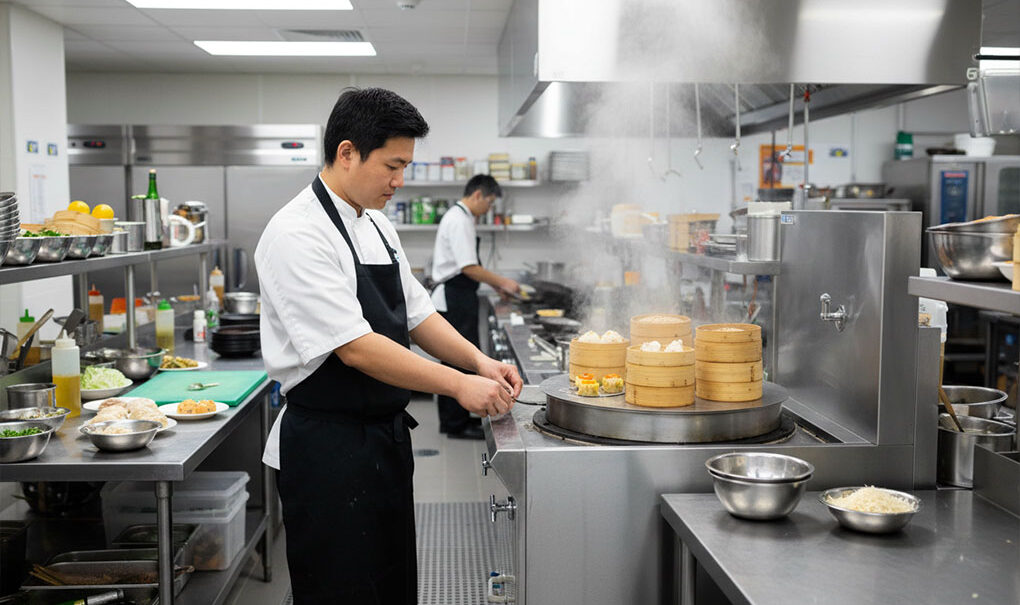
Dim Sum Steamers Australia: 2026 Buyer’s Guide
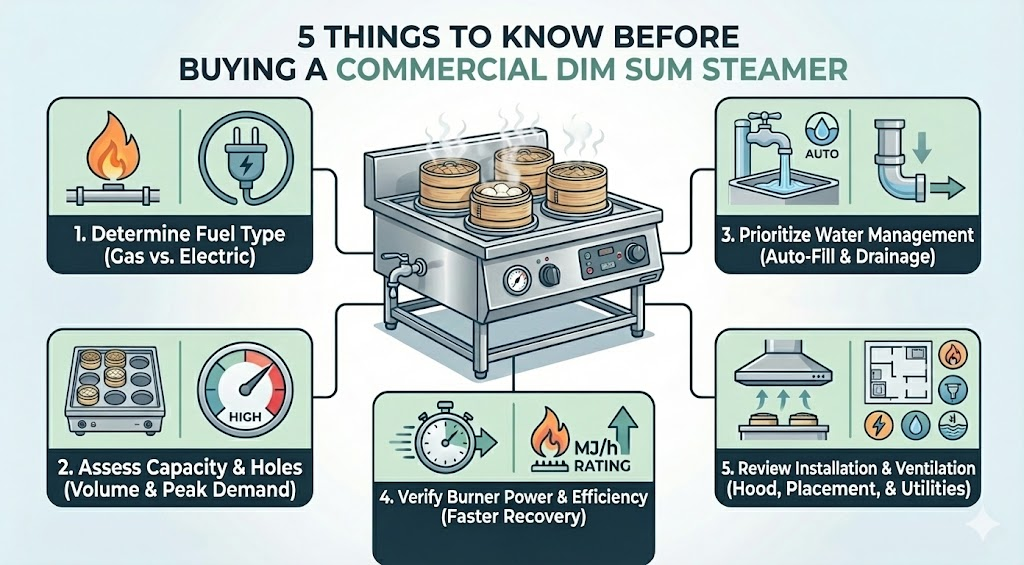
- Gas vs electric: Gas heats faster and produces more intense steam — the industry standard for high-volume yum cha. Electric is easier to install and suits smaller operations without existing gas infrastructure.
- Size by peak volume: A small café or food stall manages with 2–3 holes; a dedicated yum cha restaurant needs 7 holes or more. Always size to peak demand, not average.
- Water management: Insist on automatic water refill and a low-water cutout sensor — running a steamer dry causes expensive element damage and halts service.
- Water filtration: Hard water without a filter rapidly builds limescale on heating elements, reducing efficiency and causing premature failure.
- Ventilation: A commercial extraction hood is mandatory — high-output steamers produce significant steam that damages nearby equipment and creates a safety hazard without adequate extraction.
Choosing a Commercial Dim Sum Steamer
A commercial dim sum steamer is one of the defining pieces of equipment for any yum cha venue, Asian restaurant or takeaway serving steamed dishes. The right unit delivers authentic flavour and texture, handles peak service without bottlenecks, and withstands the demands of a busy commercial kitchen. The wrong one creates inconsistent results and service delays that damage both food quality and reputation.
This guide covers power source, capacity, water management, workflow integration and common buying mistakes. All models referenced are available through Snowmaster’s dim sum steamer range.
Matching Your Steamer to Your Business
High-Volume Yum Cha Restaurant
A city yum cha restaurant needs a powerhouse — a large gas-powered 7-hole or 9-hole steamer that produces rapid, high-intensity steam to cook hundreds of baskets during a frantic lunch service. Often installed alongside commercial wok burners on the main cooking line.
Small Takeaway or Food Stall
For a food court stall or small takeaway, a compact 2-hole or 3-hole countertop electric dim sum steamer provides enough capacity for a limited menu without requiring gas fitting or a large footprint — fitting neatly into a compact food preparation setup.
Multi-Cuisine Asian Restaurant
A diverse menu needs versatility. A 4-hole or 5-hole steamer with adjustable controls handles the lunchtime dim sum rush and doubles for steamed fish, vegetables and other dishes during dinner service — a flexible asset similar to how pasta and noodle cookers serve multiple menu applications.
Café or Multi-Purpose Kitchen
Electric models suit venues without existing gas infrastructure. A smaller electric unit works well for bao buns, steamed vegetables, seafood and dim sum items on a café menu — and is significantly simpler and cheaper to install than a gas unit in a new fit-out.
Gas vs Electric
Gas
- Heats up faster and produces more intense, consistent steam
- Industry standard for high-volume yum cha and Asian restaurant kitchens
- Requires a commercial-grade gas line installed by a licensed gas fitter
- High gas consumption rate — standard domestic lines cannot support commercial models
- Lower running costs than electric for continuous high-volume use
- Best for: High-volume yum cha, busy Asian restaurants, kitchens with existing gas infrastructure
Electric
- Easier and cheaper to install — no gas connection required
- Suitable for locations without existing gas lines
- Confirm single-phase vs three-phase power requirements before purchasing
- Slightly slower heat-up and recovery compared to gas
- Well suited to smaller operations and multi-purpose steaming applications
- Best for: Small takeaways, food stalls, cafés, new fit-outs without gas infrastructure
Key Features to Consider
Capacity and Hole Configuration
Match the number of steamer holes to your peak service volume. A small café or food stall manages with 2–3 holes. A dedicated yum cha restaurant needs 7 holes or more to maintain output during a busy lunch service. Always base your decision on peak demand — a unit that can’t keep up during a rush creates service bottlenecks and inconsistent results.
Water System and Safety Features
Automatic water refilling and a low-water cutout sensor are essential on any commercial dim sum steamer. Running a steamer dry damages heating elements and can halt production mid-service. Manual-fill units are only appropriate for very low-volume applications where constant monitoring is practical.
Water Filtration
Connecting a steamer directly to a hard water supply without filtration causes rapid limescale buildup on heating elements and in the tank. This reduces efficiency, increases energy use and leads to premature failure. A water filter is a small investment that protects a much larger one — particularly important in high-hardness areas like Brisbane and Adelaide.
Construction and Cleaning
Specify high-grade stainless steel construction for durability, corrosion resistance and food safety compliance. Look for a large drainage valve and accessible internal components — a steamer that is difficult to clean will not be cleaned properly, creating hygiene risks and performance problems over time.
Workflow Integration and Installation
Position your dim sum steamer within the main cooking line on a sturdy stainless steel bench, ideally between your prep area and the service pass. This creates a logical workflow and minimises steps for your chefs.
Pre-Installation Checklist
- Commercial extraction hood — mandatory; high-output steamers produce significant steam that must be captured to protect staff, equipment and building structure
- Gas supply — gas models require a commercial-grade gas line and licensed gas fitter; confirm supply pressure and flow capacity
- Power supply — electric models may require three-phase power; confirm with a licensed electrician before purchasing
- Water supply — plumbed water connection required; confirm supply is accessible at the installation point
- Water filtration — install a water filter upstream of the steamer, especially in hard water areas
- Drainage — confirm floor drain location relative to the unit’s drain valve
- Clearance from refrigeration — steam and heat from the steamer can damage nearby under-bench fridges — maintain adequate separation
Common Buying Mistakes
Avoid These
- Undersizing to average volume — always purchase based on peak demand; a steamer that can’t keep up during a rush creates queues, frustrated customers and inconsistent food quality
- No water filtration — hard water without a filter causes rapid limescale buildup on heating elements, reducing efficiency and causing premature failure
- Inadequate ventilation — installing a high-output gas steamer without adequate extraction creates a serious safety hazard, damages nearby equipment and may fail building inspection
- No automatic water refill — manual-fill units require constant monitoring; running a steamer dry is one of the most common causes of expensive element damage
Frequently Asked Questions
How often should I clean my dim sum steamer?
Wipe down at the end of each service day to maintain hygiene. Perform a full descaling procedure weekly or monthly depending on your water hardness and usage volume. In hard water areas like Brisbane or Adelaide, weekly descaling is recommended to prevent mineral buildup on heating elements.
Can I use a dim sum steamer for other foods?
Yes — commercial dim sum steamers are versatile. They work well for vegetables, seafood, bao buns, dumplings and steamed desserts. Their ability to produce large volumes of steam quickly makes them a valuable multi-purpose tool, similar to a combi oven in a diverse-menu kitchen.
What is the difference between a yum cha steamer and a standard food steamer?
A dedicated yum cha steamer is a high-performance commercial unit designed for speed and volume. It features multiple holes sized for traditional bamboo baskets and generates intense steam far faster than a general-purpose countertop steamer or commercial rice cooker.
Do I need a special gas connection for a gas dim sum steamer?
Yes. A commercial gas dim sum steamer requires a commercial-grade gas line installed by a licensed gas fitter. These units have high gas consumption rates — similar to stock pot burners — that standard domestic lines cannot support.
How many holes do I need for a yum cha restaurant?
A dedicated yum cha restaurant serving a busy lunch service typically needs a minimum of 7 holes to maintain output. Smaller operations with 2–3 holes will create bottlenecks during peak periods. Always size to your busiest service, not your average day.
Snowmaster stocks commercial dim sum steamers for Australian yum cha restaurants, Asian restaurants, takeaways and food stalls. Our team can help you match the right capacity and power source to your kitchen and service volume.
Also browse: Commercial Wok Burners · Noodle Cookers · Stock Pot Burners · All Cooking Equipment · Contact Us