

5 Things to Know Before Buying a Deli Display Fridge in 2026
Choosing the right deli display fridge involves assessing your space, understanding cooling systems, selecting the correct glass type, and ensuring proper ventilation for optimal performance and sales.
Introduction
Selecting the perfect deli display fridge is a crucial decision for any Australian food business. This is not just a cooling unit; it’s a powerful merchandising tool that showcases your products, entices customers, and upholds food safety standards. Whether you operate a cafe, butcher shop, or gourmet delicatessen, the right refrigerated display will boost sales and enhance your workflow. This guide covers the essential factors to consider, ensuring your investment in a new deli display fridge is a smart one.
Common Uses for a Deli Display Fridge
Different businesses have unique needs for their refrigerated displays. Understanding these applications will help you pinpoint the features that matter most for your operation.
The Urban Delicatessen
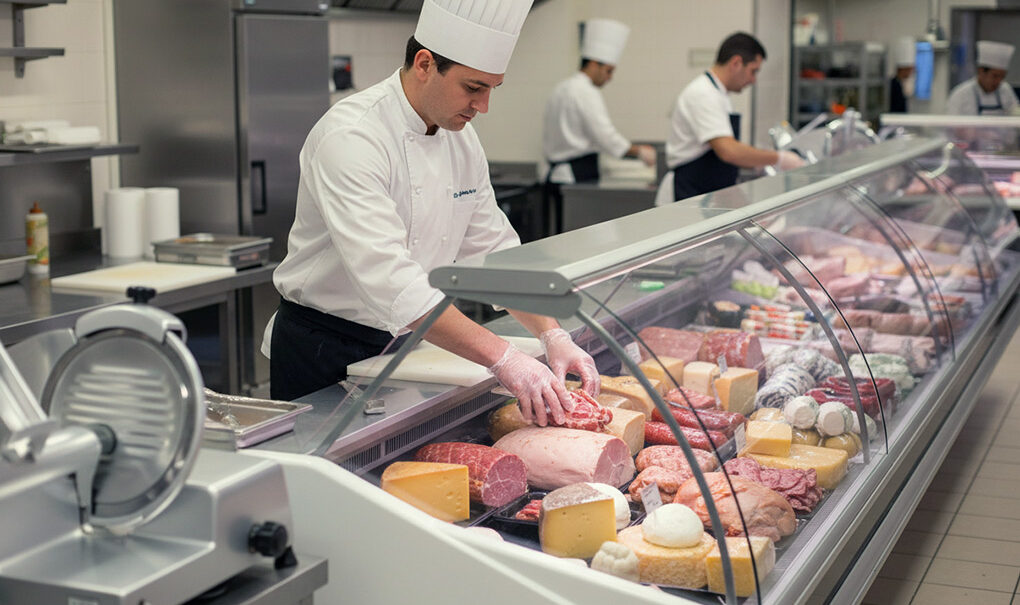
A busy city deli requires a large, visually striking deli display fridge to present a wide array of meats, cheeses, and salads. A curved glass model with bright LED lighting and rear staff access is ideal. This setup allows for rapid restocking during peak hours without disrupting customer service at the front counter.
The Local Butcher Shop
Butchers need a deli display fridge that maintains exact temperature and humidity to preserve the quality and colour of fresh meat. A unit with a gravity coil system is often preferred, as it prevents products from drying out. A durable stainless steel interior is also vital for meeting strict hygiene standards, complementing other equipment like stainless steel benches.
The Cafe or Sandwich Bar
For cafes and eateries focusing on grab-and-go items, a smaller countertop or under-bench fridge can be a perfect fit. These compact units are excellent for showcasing sandwiches, wraps, and drinks. They serve as effective point-of-sale merchandisers, similar to cake display fridges, encouraging impulse purchases without consuming valuable floor space.
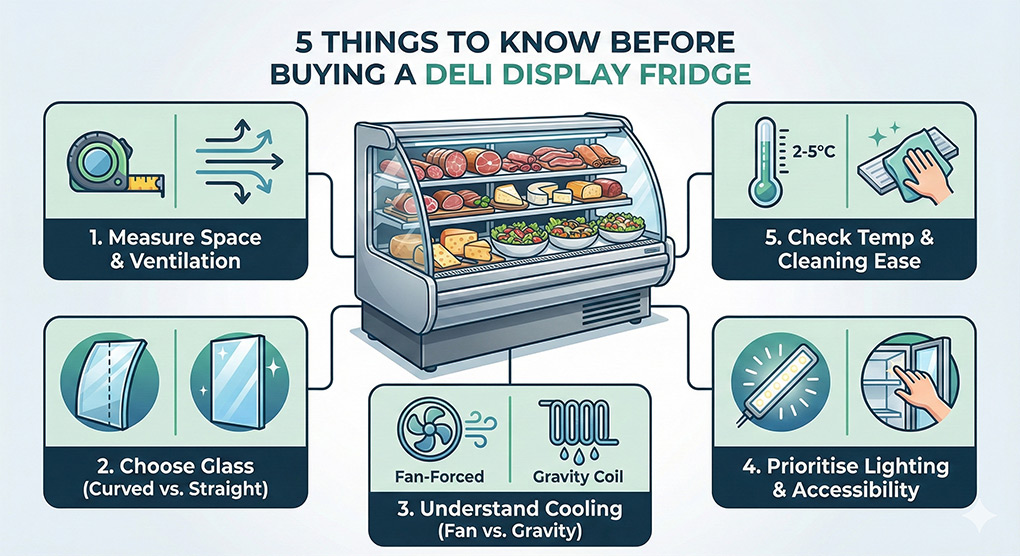
5 Things to Know Before Buying a Deli Display Fridge
Navigating the market for a deli display fridge can be complex. Keep these key considerations in mind to choose a unit that will serve your business effectively for years.
1. Measure Your Space Accurately
Before browsing models, measure the intended location precisely. Remember to account for clearance space—typically 10-15 cm on all sides—for proper ventilation. A fridge that is too large will not fit, while one that is too small represents a missed sales opportunity.
2. Choose the Right Glass Style
Curved glass offers a sleek, panoramic view of your products, giving your display a premium feel. Straight glass provides a classic, clean look and is often easier to clean with less glare. Your choice will depend on your store’s aesthetic and budget.
3. Understand the Refrigeration System
Fan-forced systems circulate cold air for consistent cooling, making them ideal for packaged goods. In contrast, gravity coil systems use natural convection. This method is gentler on delicate, unwrapped foods like cured meats, helping them retain moisture. Choosing the right system is a fundamental aspect of selecting any commercial fridge.
4. Prioritise Lighting and Accessibility
Effective lighting can make your products look irresistible. Energy-efficient LED lighting is the industry standard, as it illuminates food brightly without generating extra heat. Also, consider whether you need front-only access for customers or rear access for easier staff restocking.
5. Check Temperature & Cleaning Ease
Ensure the fridge can maintain the specific 2°C to 5°C range required for your specific food type. Additionally, look for models with removable shelves and accessible corners. A fridge that is easy to wipe down ensures hygiene standards are met with minimal staff effort.
Proper Setup and Placement
The location and installation of your deli display fridge directly affect its performance. Strategic placement is key to maximising your return on investment.
Position your deli display fridge in a high-traffic area, like near the entrance or checkout, to capture customer attention. Avoid placing it in direct sunlight or near heat sources such as combi ovens or other cooking equipment. External heat forces the compressor to work harder, increasing energy use and component wear.
Proper ventilation is non-negotiable. Ensure there is adequate clearance around the unit as specified by the manufacturer. This allows the condenser to dissipate heat efficiently, preventing overheating and premature failure. Finally, consider customer traffic flow; the display should be easily accessible without creating bottlenecks.
Common Mistakes to Avoid
A new deli display fridge is a significant investment, so it is important to avoid common pitfalls. Steer clear of these mistakes to ensure your purchase is a sound one.
Ignoring Ventilation Requirements
A frequent error is buying a fridge that fits tightly into a custom recess with no room for air circulation. This forces the unit to run constantly, leading to high energy bills and mechanical failure. Always plan for the required clearance space.
Choosing the Wrong Temperature Range
Not all display fridges are the same. A unit designed for drinks may not hold the colder, stable temperature required for safely storing fresh meat. Always verify the fridge’s temperature range aligns with the food safety requirements for your products, just as you would for commercial upright freezers.
Underestimating the Importance of Cleaning
A fridge with fixed shelves and hard-to-reach corners can be a hygiene challenge. This not only looks unprofessional but can pose a food safety risk. Opt for a model with removable shelves and a simple design to make daily cleaning manageable, and support your routine with reliable commercial sinks for easy washing of components.
Frequently Asked Questions
What is the ideal temperature for a deli display fridge?
The ideal temperature is generally between 2°C and 5°C. This range is crucial for keeping deli meats, cheeses, and prepared salads fresh and safely outside the food temperature danger zone.
How often should I clean my deli display fridge?
You should perform a light clean daily by wiping down the glass and surfaces. A deep clean, which involves removing all products and shelves to sanitise the interior, should be completed at least once a week.
What is the difference between a fan-forced and a gravity coil fridge?
A fan-forced system actively circulates cold air for an even temperature, which is great for packaged goods. A gravity coil system allows cold air to settle naturally, which is gentler and helps prevent unwrapped foods like fresh meat from drying out.
Conclusion
Choosing the right deli display fridge is a foundational step in setting up a successful food retail business. By carefully considering your space, product requirements, and operational workflow, you can select a unit that not only keeps your food safe but also drives sales. Pay close attention to ventilation, temperature control, and ease of cleaning to ensure your investment serves you well for years to come.
Ready to find the perfect model for your business? Explore our extensive collection of deli display fridges today or contact our expert team for personalised advice.