

Pie Warmer Buying Guide 2026: Find the Perfect Model
Introduction: Keeping Your Pies Perfect in 2026
This guide is designed for Australian hospitality businesses – bakeries, cafés, roadhouses, and anyone serving delicious pies. In the competitive food service industry, maintaining the quality and safety of your food is paramount. A pie warmer is more than just a piece of equipment; it’s an investment in customer satisfaction and regulatory compliance.
This comprehensive pie warmer buying guide will walk you through everything you need to know to make an informed decision in 2026. We’ll cover the different benchtop equipment types available, key features to consider, compliance requirements, cost considerations, common mistakes to avoid, essential maintenance tips, and a look at some of the top brands in Australia. Whether you’re upgrading your existing equipment or setting up a new business, this guide will help you select the perfect pie warmer for your needs.
We’ll also explore the importance of proper maintenance and cleaning to ensure your pie warmer operates efficiently and safely for years to come. By the end of this guide, you’ll be well-equipped to choose the right pie warmer to keep your pies warm, fresh, and ready to delight your customers.
Too Long; Didn’t Read? Here’s the Short Version
- This pie warmer buying guide helps Australian businesses choose the right pie warmer for 2026.
- Consider the type of pie warmer needed: countertop, floor-standing, or display.
- Key features include capacity, temperature control, energy efficiency, and shelving configuration.
- Ensure compliance with FSANZ and HACCP standards for food safety.
- Factor in upfront costs, running costs, and warranty when making your decision.
What is a Pie Warmer?
A pie warmer is a specialised appliance designed to maintain the temperature of pies, pastries, and other baked goods at a safe and palatable level for extended periods. Unlike domestic ovens, which are designed for cooking, commercial pie warmers are specifically engineered to hold food at a consistent temperature, preventing it from drying out or becoming unsafe to consume.
For businesses, a pie warmer is essential for maintaining food quality, reducing waste, and ensuring compliance with food safety regulations. They are a staple in benchtop cooking and display setups such as cafés, bakeries, convenience stores, and any establishment serving pies as part of their menu. A commercial pie warmer is built to withstand the rigours of daily use, providing reliable performance and consistent results.
Here’s a quick comparison of domestic vs. commercial pie warmers:
- Domestic: Designed for occasional use, lower capacity, less precise temperature control, shorter lifespan.
- Commercial: Built for continuous use, high capacity, precise temperature control, durable construction, longer lifespan, compliance with food safety standards.
For example, a small cafe might use a countertop pie warmer to display and keep a selection of pies warm throughout the day. A larger bakery might use a floor-standing model with multiple shelves to accommodate a wider variety of products. Roadhouses often rely on robust, high-capacity pie warmers to cater to a constant stream of travellers.
Types of Pie Warmers
Pie warmers come in various shapes and sizes to suit different business needs. Understanding the different types available will help you choose the right one for your specific requirements.
Countertop Pie Warmers
Compact and space-saving, Countertop pie warmers are designed to sit on a counter or tabletop. They are ideal for businesses with limited space or those that only need to display a small selection of pies.
- Pros: Space-saving, portable, easy to clean, relatively inexpensive.
- Cons: Limited capacity, may not be suitable for high-volume businesses.
- Best for: Small cafes, convenience stores, and bakeries with limited counter space.
Example: A small cafe might use a countertop pie warmer to display a selection of four to six popular pies near the checkout counter.
Floor-Standing Pie Warmers
Floor-standing pie warmers are larger and designed to stand on the floor. They offer greater capacity and are suitable for businesses that need to display a larger variety of pies.
- Pros: High capacity, multiple shelves, often have better temperature control.
- Cons: Takes up more space, less portable, generally more expensive.
- Best for: Bakeries, large cafes, and restaurants with high pie sales.
Example: A bakery might use a floor-standing pie warmer to display a wide selection of pies, sausage rolls, and other pastries.
Display Pie Warmers
Display models combine warmth with presentation. They often feature glass fronts and LED lighting like our ambient food display cabinets and bain maries.
- Pros: Attractive display, enhances product visibility, encourages impulse purchases.
- Cons: Can be more expensive, may require more cleaning to maintain appearance.
- Best for: Businesses that want to highlight their pies and attract customers.
Example: A roadhouse might use a display pie warmer near the entrance to entice hungry travellers with a tempting selection of pies.

Rotating Pie Warmers
These units feature rotating trays that evenly display all products — perfect for busy cafés or service stations where visibility drives sales.
- Pros: Even display, attracts attention, ensures all pies are equally visible.
- Cons: Can be more complex mechanically, may require more maintenance.
- Best for: High-traffic locations where visual appeal is important.
Example: A busy train station cafe might use a rotating pie warmer to attract customers and showcase their pie selection.
Key Features to Consider
When choosing a pie warmer, several key features can impact its performance, efficiency, and suitability for your business.
Capacity
Capacity refers to the number of pies the warmer can hold. Consider your average daily sales and choose a warmer that can accommodate your peak demand. A pie warmer that’s too small will require frequent refilling, while one that’s too large will waste energy.
- Example: A small cafe selling 20 pies a day might opt for a countertop warmer with a capacity of 24 pies.
Temperature Control
Precise temperature control is crucial for maintaining food safety and quality. Look for a warmer with adjustable thermostat and a clear temperature display. The ideal temperature range for holding pies is typically between 60°C and 70°C.
- Example: A digital thermostat allows you to set and maintain the precise temperature needed to keep your pies warm without drying them out.
Energy Efficiency
Energy efficiency can significantly impact your running costs. Look for a warmer with good insulation and energy-saving features. Check the energy star rating where applicable. You can explore more energy-saving solutions in our energy-efficient equipment range.
- Example: An energy-efficient pie warmer can save you hundreds of dollars per year in electricity costs.
Shelving Configuration
The shelving configuration should be suitable for the types of pies you sell. Adjustable shelves allow you to accommodate pies of different sizes. Consider the material of the shelves; stainless steel is durable and easy to clean.
- Example: Adjustable shelves allow you to display both standard-sized pies and larger family-sized pies.
Noise Level
While not always a primary concern, the noise level of the pie warmer can be important, especially in quiet environments. Look for models with quiet operation.
- Example: A noisy pie warmer can be distracting in a small cafe, so choose a model with low noise emissions.
Warranty
A good warranty provides peace of mind and protects your investment. Look for a warmer with a comprehensive warranty that covers both parts and labour. A longer warranty period indicates the manufacturer’s confidence in the product’s reliability.
- Example: A two-year warranty on parts and labour demonstrates the manufacturer’s commitment to quality and durability.
Compliance and Food Safety
In Australia, food businesses must comply with strict food safety regulations to protect public health. Pie warmers play a crucial role in maintaining food safety by keeping pies at a safe temperature, preventing the growth of harmful bacteria.
FSANZ (Food Standards Australia New Zealand): FSANZ develops and administers the Food Standards Code, which sets out the requirements for food safety in Australia. Businesses must comply with these standards to ensure their food is safe for consumption. (FSANZ link included here for completeness)
HACCP (Hazard Analysis and Critical Control Points): HACCP is a systematic approach to identifying, evaluating, and controlling food safety hazards. Implementing a HACCP plan can help businesses ensure their pie warmers are used correctly and that food is stored at safe temperatures.
Energy Labelling: While not directly related to food safety, energy labelling helps businesses choose energy-efficient appliances, reducing their environmental impact and lowering operating costs.
Examples of Compliance Failures:
- Storing pies at temperatures below 60°C, allowing bacteria to grow.
- Failing to regularly clean the pie warmer, leading to contamination.
- Not monitoring the temperature of the pie warmer, resulting in unsafe food.
Compliance Checklist:
- Ensure the pie warmer maintains a temperature between 60°C and 70°C.
- Regularly clean and sanitise the pie warmer.
- Monitor the temperature of the pie warmer regularly.
- Keep records of temperature checks and cleaning schedules.
- Train staff on proper food safety procedures.
Cost Considerations
The cost of a pie warmer can vary depending on its size, features, and brand. It’s important to consider both the upfront cost and the ongoing running costs when making your decision.
Entry-Level: Entry-level pie warmers are typically smaller countertop models with basic features. They can range from $300 to $800 AUD.
Mid-Range: Mid-range pie warmers offer a balance of features and capacity. They may include adjustable shelves, digital temperature controls, and better insulation. Expect to pay between $800 and $1500 AUD.
Premium: Premium pie warmers are typically larger floor-standing or display models with advanced features such as precise temperature control, energy-saving technology, and attractive designs. These can cost upwards of $1500.
Ongoing Running Costs: The ongoing running costs of a pie warmer include electricity consumption and maintenance. Energy-efficient models will have lower running costs. Regular cleaning and maintenance can also help extend the lifespan of your pie warmer and reduce the need for costly repairs.
Warranties: Warranties typically range from one to three years. A longer warranty provides greater protection against unexpected repairs.
ROI and Long-Term Cost Savings: Investing in a high-quality, energy-efficient pie warmer can save you money in the long run. By reducing food waste and lowering energy consumption, you can achieve a significant return on your investment. For example, a bakery that reduces its daily pie waste by just two pies can save hundreds of dollars per year.
Compare models across our Pie Warmer range or related equipment such as Chip Warmers and Soup Kettles to find the best fit for your needs.
Common Mistakes to Avoid
Choosing the wrong pie warmer or using it incorrectly can lead to food safety issues, increased costs, and dissatisfied customers. Here are some common mistakes to avoid:
- Buying the wrong size: Choosing a pie warmer that’s too small or too large for your needs can lead to inefficiencies and wasted energy.
- Ignoring temperature control: Failing to monitor and adjust the temperature of the pie warmer can result in unsafe food.
- Neglecting cleaning and maintenance: Not cleaning the pie warmer regularly can lead to contamination and equipment failure.
- Overcrowding the pie warmer: Overcrowding can prevent proper air circulation, leading to uneven heating and potential food safety issues.
- Not training staff: Failing to train staff on proper pie warmer operation and food safety procedures can increase the risk of mistakes.
- Ignoring energy efficiency: Choosing an energy-inefficient pie warmer can significantly increase your running costs.
- Not considering the warranty: Ignoring the warranty terms can leave you vulnerable to unexpected repair costs.
Example: A bakery that buys a pie warmer without considering its energy efficiency might find itself with unexpectedly high electricity bills, impacting its profitability.
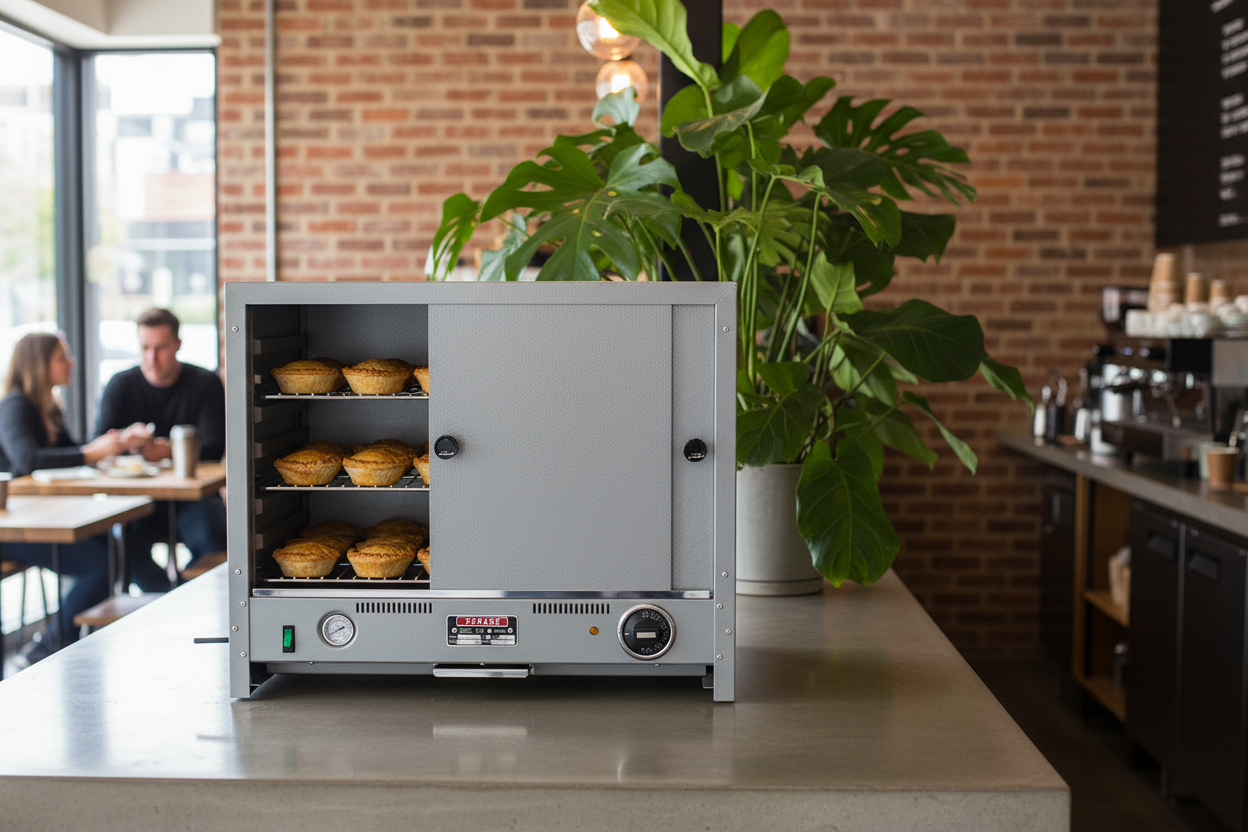
Regular cleaning prevents breakdowns and contamination.
Maintenance and Cleaning
Regular maintenance and cleaning are essential for ensuring your pie warmer operates efficiently, safely, and reliably. Proper maintenance can also extend the lifespan of your equipment and prevent costly repairs.
Daily Practices:
- Wipe down the interior and exterior of the pie warmer with a damp cloth.
- Remove any food debris or spills.
- Check the temperature and adjust as needed.
Weekly Practices:
- Thoroughly clean the interior and exterior of the pie warmer with a food-safe cleaner.
- Remove and wash the shelves.
- Check the door seals for damage and replace if necessary.
Monthly Practices:
- Inspect the heating elements for damage.
- Check the thermostat for accuracy.
- Clean the ventilation openings to ensure proper airflow.
Why Maintenance Matters:
- Food Safety: Regular cleaning prevents the growth of harmful bacteria, ensuring your pies are safe to consume.
- Uptime: Proper maintenance can prevent breakdowns and ensure your pie warmer is always ready to use.
- Efficiency: A clean and well-maintained pie warmer operates more efficiently, saving you money on energy costs.
Recognised Pie Warmer Brands & Their Features
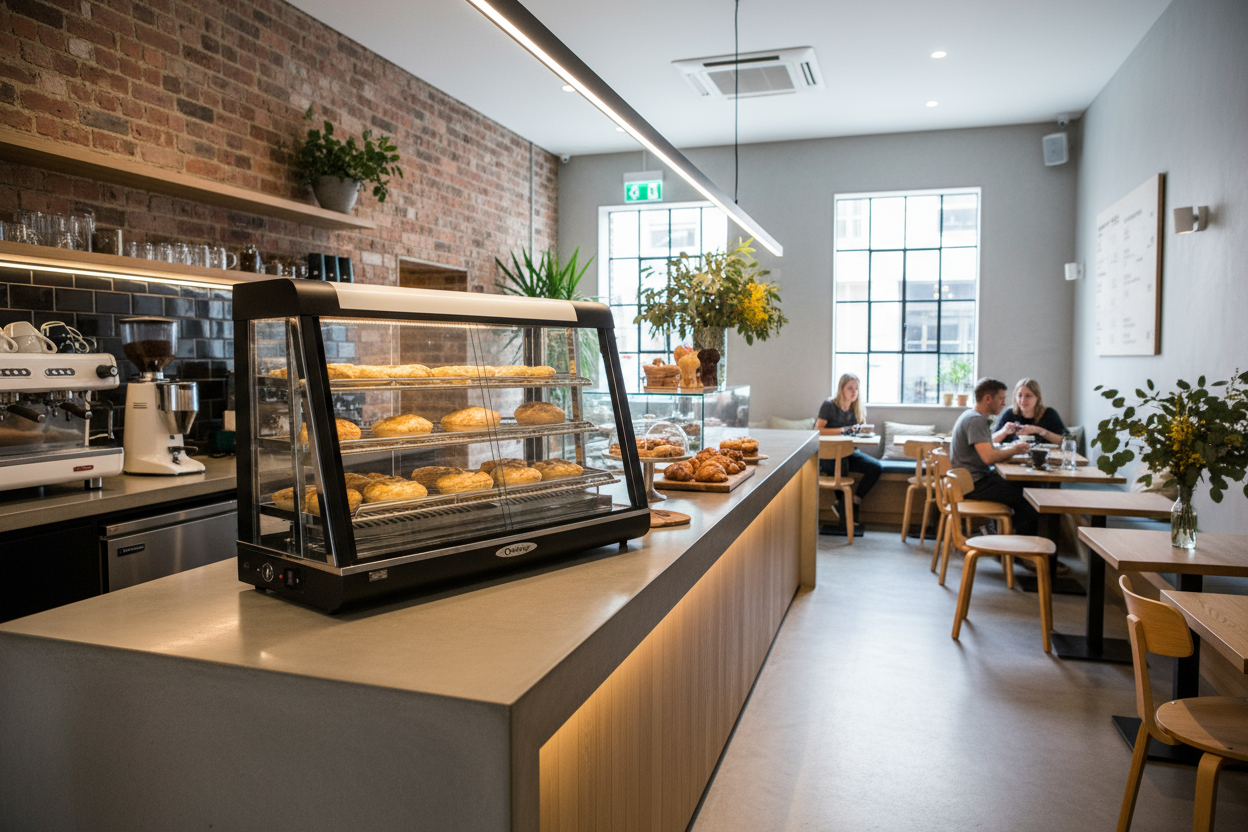
Leading commercial pie warmer brands widely available include Roband, Woodson, Anvil, Birko, Apuro, Benchstar, Bonvue, Cookon, ICS Pacific, King Edward, and Hatco. These manufacturers produce a diverse range of units, from compact countertop models suitable for small cafés to large-capacity, heavy-duty displays.
Popular Brands and Their Specializations
| Brand | Primary Focus & Features | Ideal For |
|---|---|---|
| Roband | Known for the “Pie Master” series. Offers models across various capacities featuring hinged glass doors and effective internal lighting. | Established bakeries prioritizing reliable, well-lit display. |
| Woodson | Provides durable, high-volume units with stainless steel cabinets and practical sliding glass doors. | Busy environments requiring easy staff access and robust construction. |
| Anvil | Specializes in compact “mini warmers” and essential substantial units. | Mobile vendors, small kiosks, or operations with limited counter space. |
| Birko | Focuses on robust, tough construction often with glass door options. | Cafés and busy takeaway spots where durability is key (e.g., tradie lunch spots). |
| Apuro | Offers a variety of economical, budget-friendly hot food merchandisers in different capacities. | Businesses seeking reliable equipment at a lower upfront cost. |
| Cookon | Specializes in heavy-duty, commercial LPG gas-powered ovens and warmers. | Food trucks and large-scale, off-grid mobile operations. |
| Hatco | A notable brand for premium countertop heated display cases and food warmers. | High-end food service where presentation is critical. |
Key Considerations: When selecting a brand and model, focus on the required pie capacity, the type of door access (sliding vs. hinged), and the necessary power source (electric or LPG gas).
Pre-Purchase Checklist
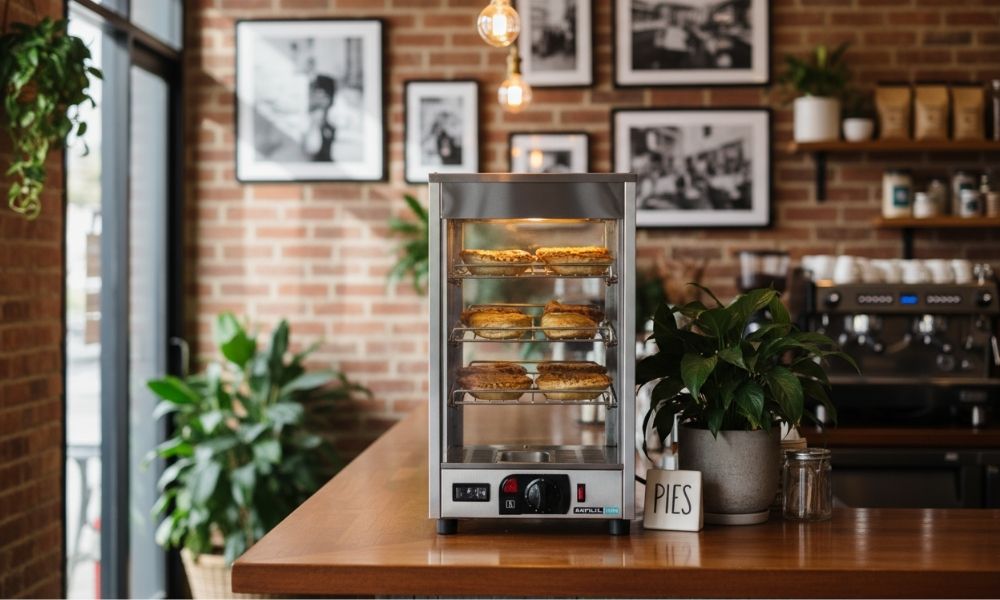
Before you buy a pie warmer, consider the following factors to ensure you choose the right model for your business:
- Capacity: Determine the number of pies you need to display and keep warm at any given time.
- Size: Measure the available space in your kitchen or serving area to ensure the pie warmer will fit comfortably.
- Features: Consider the features that are most important to you, such as adjustable shelves, digital temperature control, and energy efficiency.
- Compliance: Ensure the pie warmer meets all relevant food safety standards. (FSANZ standards included here for completeness)
- Cost: Compare prices from different brands and suppliers to find the best deal.
- Warranty: Check the warranty terms and conditions to ensure you are protected against unexpected repairs.
- Reviews: Read online reviews from other businesses to get an idea of the pie warmer’s performance and reliability.
Frequently Asked Questions
Q: What temperature should a pie warmer be set at?
A: A pie warmer should be set between 60°C and 70°C to maintain food safety and prevent the growth of harmful bacteria. This temperature range keeps pies warm without drying them out.
Q: How often should I clean my pie warmer?
A: You should wipe down your pie warmer daily and thoroughly clean it at least once a week. Regular cleaning prevents contamination and ensures optimal performance.
Q: What is the best type of pie warmer for a small cafe?
A: A countertop pie warmer is typically the best choice for a small cafe due to its compact size and ease of use. Countertop models are space-saving and relatively inexpensive.
Q: How can I reduce the running costs of my pie warmer?
A: Choose an energy-efficient model with good insulation and energy-saving features. Also, ensure the door seals are in good condition to prevent heat loss.
Q: What should I do if my pie warmer is not heating properly?
A: First, check the thermostat setting and ensure the pie warmer is plugged in and turned on. If the problem persists, contact a qualified technician for repair.
Q: How long can I keep pies in a pie warmer?
A: Pies can be safely kept in a pie warmer for up to four hours, provided the temperature is maintained between 60°C and 70°C. After four hours, they should be discarded.
Q: Are there any specific food safety regulations I need to be aware of?
A: Yes, you need to comply with FSANZ and HACCP standards to ensure your food is safe for consumption. This includes maintaining proper temperatures, cleaning regularly, and training staff on food safety procedures.
Conclusion: Choosing the Right Pie Warmer for Your Business
Selecting the right pie warmer is a crucial decision for any Australian hospitality business serving pies. By considering the different types of pie warmers, key features, compliance requirements, cost considerations, and common mistakes to avoid, you can make an informed choice that meets your specific needs.
Remember to prioritise food safety, energy efficiency, and durability when making your decision. A well-chosen and properly maintained pie warmer will not only keep your pies warm and delicious but also contribute to the success and profitability of your business.
If you’re ready to explore available options, view our full Pie Warmer Range or browse related Benchtop Equipment for complementary solutions like Soup Kettles, Toasters, and Chip Warmers.