

Commercial Blenders Buying Guide 2026; Expert Advice for Businesses
Introduction: Choosing the Right Commercial Blender for 2026
Welcome to the ultimate guide to buying a commercial blender in 2026! If you’re running a cafe, restaurant, bar, or any other hospitality business in Australia, you know how crucial the right equipment is. A high-quality commercial blender can be the difference between smooth operations and a frustrating bottleneck.
This guide is specifically designed for Australian businesses looking to invest in a commercial blender that will stand the test of time. We’ll cover everything from understanding the different types of blenders available to navigating compliance requirements and budgeting for your purchase. We’ll also look at what features to consider and how to avoid common mistakes.
Whether you’re blending smoothies, soups, sauces, or cocktails, this guide will equip you with the knowledge to make an informed decision and buy a commercial blender in Australia with confidence. Let’s dive in!
Too Long; Didn’t Read? Here’s the Short Version
- This commercial blender buying guide helps you choose the best commercial blender for your needs in 2026.
- Consider the types of blending you’ll be doing most often (smoothies, soups, ice crushing) to narrow down your options.
- Pay attention to motor power, blade design, and container material for durability and performance.
- Factor in compliance requirements (FSANZ standards) to ensure food safety.
- Don’t just focus on the initial cost; consider long-term running costs and warranty coverage.
What is a Commercial Blender?
A commercial blender is a heavy-duty appliance designed for the rigorous demands of a professional kitchen or bar. Unlike domestic blenders, which are built for occasional use, commercial blenders are engineered for high-volume blending, durability, and consistent performance. They’re built to withstand constant use, often for hours each day.
The key difference lies in the construction. Commercial blenders typically feature more powerful motors, stronger blades, and more robust containers made from materials like stainless steel or high-impact polycarbonate. This ensures they can handle tough ingredients and repeated use without breaking down.
Here’s a quick comparison:
-
- Domestic Blenders: Lower power, less durable, designed for occasional use, smaller capacity, cheaper.
- Commercial Blenders: Higher power, more durable, designed for constant use, larger capacity, more expensive.
For example, a cafe making 50 smoothies a day needs a commercial blender. A domestic blender would likely burn out quickly. A restaurant pureeing large batches of soup also requires the power and capacity of a commercial model. Even a bar that regularly crushes ice for cocktails will benefit from the robust design of a commercial blender.
Types of Commercial Blenders
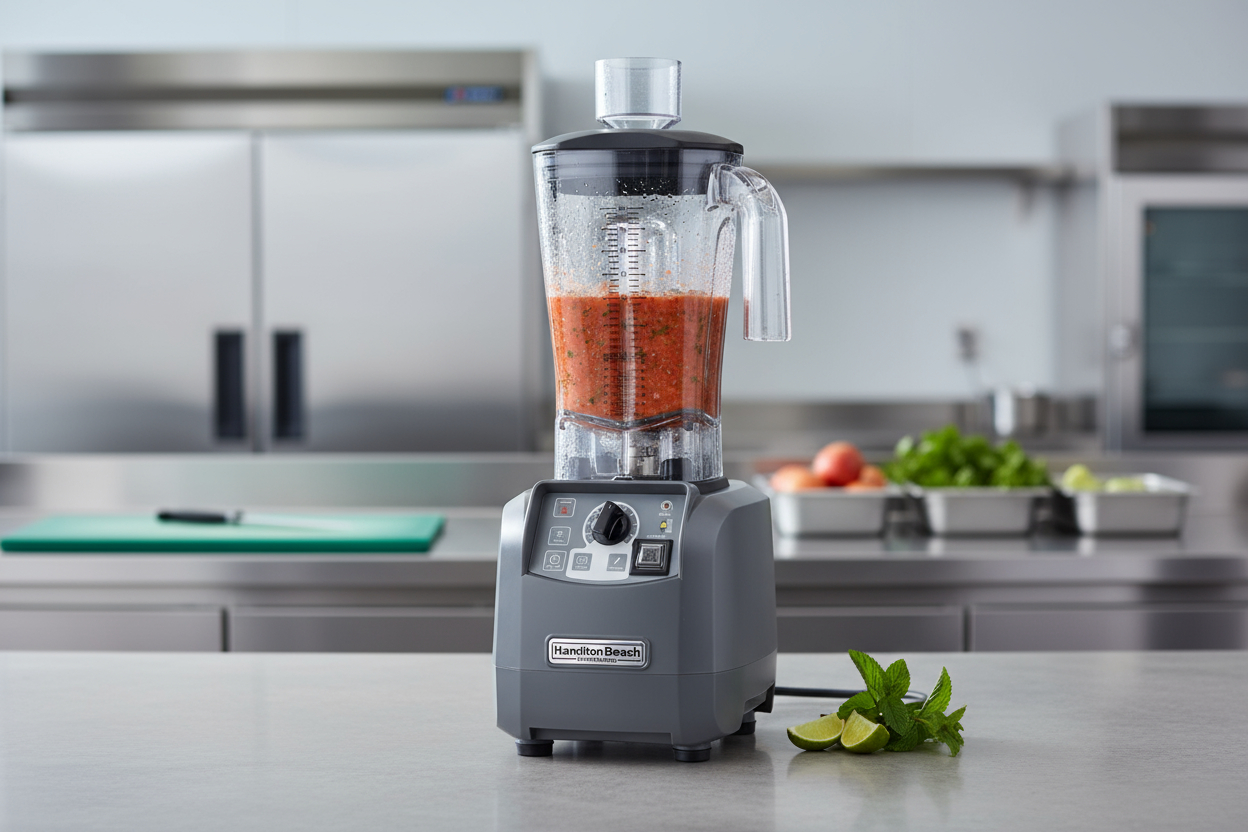
Commercial blenders come in various types, each designed for specific tasks. Understanding these differences will help you choose the right blender for your business.
High-Performance Blenders
These are the workhorses of the blender world, designed for everything from smoothies to soups. They feature powerful motors and durable blades.
- Pros: Versatile, powerful, can handle tough ingredients.
- Cons: Can be noisy, more expensive.
- Best For: High-volume smoothie shops, restaurants with diverse blending needs.
- Example: A busy cafe using it to make dozens of smoothies and frappes every morning.
Immersion Blenders (Stick Blenders)
These handheld blenders are perfect for pureeing soups and sauces directly in the pot.
- Pros: Convenient, easy to clean, great for hot liquids.
- Cons: Less powerful than countertop models, limited capacity.
- Best For: Restaurants making soups and sauces in large batches.
- Example: A restaurant using it to blend a large pot of pumpkin soup.
Beverage Blenders
Specifically designed for making smoothies, milkshakes, and other blended drinks.
- Pros: Optimized for liquid blending, often quieter than high-performance models.
- Cons: Not ideal for thick or dry ingredients.
- Best For: Bars, cafes, and smoothie shops focused on beverages.
- Example: A bar using it to make frozen cocktails.
Ice Crushers
These blenders are built to crush large quantities of ice quickly and efficiently.
- Pros: Powerful ice crushing, durable construction.
- Cons: Limited versatility, not suitable for other blending tasks.
- Best For: Bars and restaurants that serve a lot of frozen drinks.
- Example: A bar using it to make crushed ice for mojitos and margaritas.
Sound-Shielded Blenders
These blenders are enclosed in a sound-dampening shield to reduce noise levels.
- Pros: Quiet operation, ideal for open kitchens or noise-sensitive environments.
- Cons: More expensive, can be bulky.
- Best For: Cafes and bars where noise is a concern.
- Example: A cafe using it to blend smoothies without disturbing customers.
Key Features to Consider
When choosing a commercial blender, several key features can impact its performance, durability, and suitability for your business. Here’s what to look for:
Motor Power
The motor’s power (measured in watts or horsepower) determines how well the blender can handle tough ingredients. Higher power means better performance and longer lifespan. For example, a blender with a 1500-watt motor will crush ice and blend frozen fruit much more easily than a 500-watt model. This matters for cost because a more powerful motor will likely cost more upfront but save you money in the long run by avoiding breakdowns and providing faster service.
Blade Design
The blade’s shape, material, and number of blades affect its blending efficiency. Stainless steel blades are a must for durability. Some blenders have specialized blade designs for specific tasks, such as ice crushing or emulsifying sauces. Consider a blender with multiple blade angles for more thorough blending. A poorly designed blade can lead to uneven blending and wasted ingredients.
Container Material and Capacity
Commercial blender containers are typically made from polycarbonate or stainless steel. Polycarbonate is lightweight and shatterproof, while stainless steel is more durable and resistant to staining. Capacity is also important; choose a container size that matches your typical batch sizes. For example, a small cafe might only need a 1-litre container, while a busy restaurant might require a 2-litre or larger container. The container needs to be food-grade to comply with FSANZ standards.
Controls and Programs
Look for blenders with intuitive controls and pre-programmed settings for common tasks like smoothies, soups, and ice crushing. These programs can save time and ensure consistent results. Simple, easy-to-clean controls are also a plus. A blender with too many complicated buttons can be frustrating to use and more prone to malfunction.
Noise Level
Commercial blenders can be quite noisy, which can be a concern in open kitchens or customer areas. Consider a sound-shielded blender if noise is a major issue. Some blenders also have features to reduce vibration and noise. High noise levels can also violate workplace health and safety regulations.
Warranty
A good warranty is essential for protecting your investment. Look for blenders with a minimum of one-year warranty on parts and labour. Some manufacturers offer extended warranties for added peace of mind. A longer warranty indicates the manufacturer’s confidence in the product’s durability.
Compliance and Safety Standards
In Australia, commercial blenders must meet certain compliance and safety standards to ensure food safety and workplace safety. Here’s what you need to know:
FSANZ (Food Standards Australia New Zealand)
FSANZ sets the standards for food safety in Australia. Commercial blenders must be made from food-grade materials and be easy to clean and sanitise to prevent contamination. For example, using a blender with damaged or non-food-grade components could lead to foodborne illnesses and hefty fines.
HACCP (Hazard Analysis and Critical Control Points)
HACCP is a system for identifying and controlling food safety hazards. Your business should have a HACCP plan in place, and your commercial blender should be included in that plan. This means implementing procedures for cleaning, sanitizing, and maintaining the blender to prevent contamination. Failure to comply with HACCP guidelines can result in closure of your business.
Energy Labelling
While not always mandatory for commercial blenders, energy efficiency is still important. Look for blenders with energy-saving features to reduce your electricity bills. Using an energy-efficient blender can also help you reduce your carbon footprint.
Here’s a quick compliance checklist:
- Ensure the blender is made from food-grade materials.
- Implement a cleaning and sanitizing schedule.
- Train staff on proper blender usage and maintenance.
- Include the blender in your HACCP plan.
- Regularly inspect the blender for damage or wear.
Costs and Budgeting
The cost of a commercial blender can vary widely depending on its type, features, and brand. Here’s a general overview of what you can expect to pay:
Entry-Level Blenders
These blenders typically cost between $300 and $700. They’re suitable for small businesses with low-volume blending needs. While cheaper upfront, they may not be as durable or powerful as higher-end models.
Mid-Range Blenders
These blenders range from $700 to $1500. They offer a good balance of performance, durability, and features. They’re a good choice for medium-sized businesses with moderate blending needs.
Premium Blenders
These blenders can cost $1500 or more. They’re designed for high-volume use and offer the best performance, durability, and features. They’re ideal for large restaurants, bars, and smoothie shops.
Ongoing Running Costs
In addition to the initial purchase price, you’ll also need to factor in ongoing running costs, such as electricity, maintenance, and repairs. Energy-efficient blenders can help reduce your electricity bills. Regular maintenance can prevent costly repairs. For example, replacing worn-out blades can improve blending performance and extend the blender’s lifespan.
Warranties
A good warranty can save you money in the long run by covering the cost of repairs or replacements. Look for blenders with a minimum of one-year warranty on parts and labour. Some manufacturers offer extended warranties for an additional fee.
Consider this ROI example: A $2000 blender with a 5-year warranty that reduces blending time by 20% could save a cafe $500 per year in labour costs, paying for itself in just four years.
Common Mistakes to Avoid
Buying a commercial blender is a significant investment. Here are some common mistakes to avoid:
- Buying a blender that’s too small: Always overestimate your blending needs. A blender that’s too small will be overworked and prone to breakdowns. For instance, a juice bar that underestimates the amount of smoothies they will sell will have to replace their blender much sooner than expected.
- Ignoring the motor power: A weak motor won’t be able to handle tough ingredients. Choose a blender with sufficient power for your blending needs.
- Overlooking the blade design: The blade’s shape and material affect its blending efficiency. Choose a blender with blades that are designed for your specific tasks.
- Neglecting maintenance: Regular cleaning and maintenance are essential for prolonging the blender’s lifespan. A restaurant that fails to clean their blender properly may face hygiene issues.
- Ignoring noise levels: A noisy blender can disrupt your customers and staff. Consider a sound-shielded blender if noise is a concern.
- Not checking compliance: Ensure the blender meets all relevant food safety standards.
- Focusing solely on price: The cheapest blender isn’t always the best value. Consider the long-term costs of maintenance and repairs.
Maintenance and Care
Proper maintenance is crucial for prolonging the lifespan of your commercial blender and ensuring food safety. Here are some best practices:
Daily Maintenance
- Rinse the container and blades immediately after each use.
- Wash the container and blades with warm, soapy water.
- Sanitise the container and blades with a food-safe sanitiser.
- Wipe down the blender base with a damp cloth.
Weekly Maintenance
- Disassemble the blender and clean all parts thoroughly.
- Check the blades for sharpness and replace them if necessary.
- Inspect the motor for any signs of wear or damage.
- Clean the blender’s ventilation openings to prevent overheating.
Monthly Maintenance
- Deep clean the blender according to the manufacturer’s instructions.
- Lubricate any moving parts as needed.
- Check the power cord for damage and replace it if necessary.
- Calibrate the blender’s controls if needed.
Regular maintenance not only extends the life of your blender but also prevents foodborne illnesses by eliminating bacteria buildup. A well-maintained blender also operates more efficiently, saving you time and energy.
Best Commercial Blender Brands in Australia
The best commercial blender brands in Australia include Vitamix, Blendtec, Hamilton Beach, and Grange — all known for their power, durability, and reliability in high-demand hospitality environments such as cafés, restaurants, bars, and juice bars. Other reputable names include Omega and OmniBlend, offering dependable performance for businesses seeking cost-effective options.
Vitamix
Vitamix is one of the most trusted brands in the Australian hospitality industry, known for its exceptional performance, long-term reliability, and versatility. Models such as the Vitamix XL and Vitamix Quiet One cater to both high-capacity blending and front-of-house use, making them ideal for restaurants, smoothie bars, and busy cafés.
Blendtec
Blendtec blenders are designed for performance and precision, easily handling tough ingredients, frozen fruit, and dense recipes. The Blendtec Stealth 885 features a built-in sound enclosure, making it one of the quietest and most efficient options for cafés and juice bars focused on customer experience.
Hamilton Beach
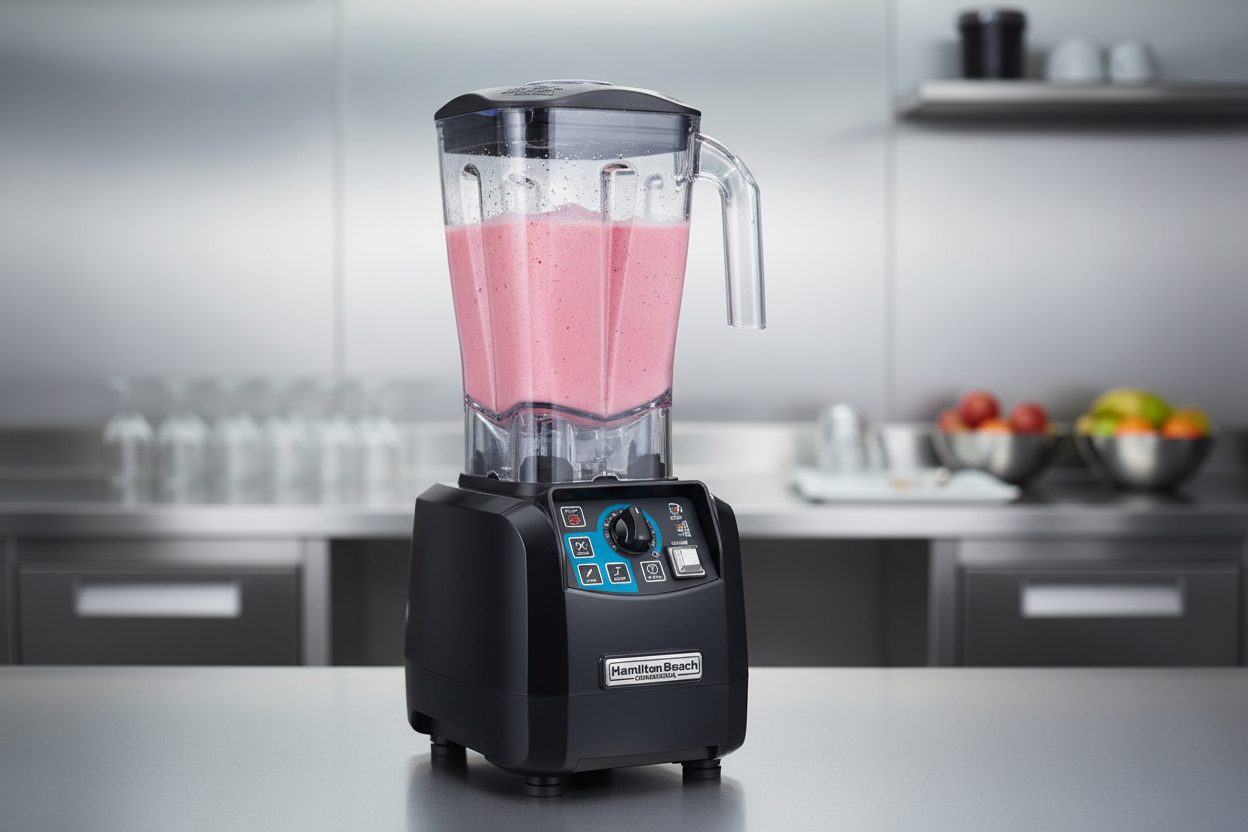
Hamilton Beach offers a range of durable, heavy-duty commercial blenders ideal for busy kitchens and beverage operations. They’re popular among Australian cafés and bars for their reliability, simplicity, and affordability, providing consistent performance for both smoothies and cocktails.
Grange
Grange is an Australian commercial equipment brand offering practical, affordable, and high-performing blenders designed for the hospitality market. The Grange GR1080 Bondi Mini Blender (1.2L) is ideal for smaller operations or single-serve smoothie preparation, while the Grange GR980 Bondi Bar Blender (2.5L) features a noise-reduction shield and powerful motor — perfect for cafés, bars, and juice outlets requiring quieter performance and larger capacity.
Grange GR1080 Bondi Mini Blender (1.2L) and GR980 Bondi Bar Blender (2.5L) — reliable Australian-designed blenders built for commercial use.
OmniBlend
OmniBlend is known for its long-lasting, high-performance blenders that provide excellent value for money. A popular choice in Australia, OmniBlend units are used in restaurants, juice bars, and catering businesses as durable, cost-effective alternatives to premium global brands.
Omega
Omega commercial blenders are a reliable choice for small hospitality businesses seeking strong performance on a budget. They deliver consistent results for smoothie shops, cafés, and catering setups without the higher cost of top-tier models.
How to Choose the Right Brand
- Consider your usage: Determine the main purpose — whether blending smoothies, crushing ice, or preparing soups — and choose a model suited to that workload.
- Prioritise durability and power: Look for commercial-grade motors and strong blades to ensure consistent performance throughout the day.
- Check noise levels: For customer-facing environments, select a model with a sound enclosure or quiet operation feature.
- Review warranties: Opt for brands that provide at least a 12-month warranty on parts and labour to ensure long-term reliability.
All of these brands are trusted in Australia’s hospitality sector — from cafés and bars to school canteens, food trucks, and catering operations — offering dependable performance and long-term value for commercial kitchens of every size.
Pre-Purchase Checklist
Before you buy a commercial blender, consider the following:
- Assess your blending needs: What types of ingredients will you be blending? How much volume do you need to blend each day?
- Set a budget: How much can you afford to spend on a commercial blender?
- Research different models: Read reviews and compare features to find the best blender for your needs.
- Check compliance: Ensure the blender meets all relevant food safety standards.
- Consider the warranty: Choose a blender with a good warranty to protect your investment.
- Read the manual: Understand the blender’s features and how to use it properly.
- Ask for a demo: If possible, try out the blender before you buy it.
Frequently Asked Questions
What is the difference between a commercial blender and a domestic blender?
Commercial blenders are designed for high-volume use and are built to withstand the rigors of a professional kitchen. Domestic blenders are designed for occasional use and are not as durable or powerful.
How much should I spend on a commercial blender?
The cost of a commercial blender can vary widely depending on its type, features, and brand. Entry-level blenders can cost as little as $300, while premium models can cost $1500 or more.
What features should I look for in a commercial blender?
Key features to consider include motor power, blade design, container material and capacity, controls and programs, noise level, and warranty.
How do I maintain a commercial blender?
Regular cleaning and maintenance are essential for prolonging the blender’s lifespan. Rinse the container and blades after each use, wash them with warm, soapy water, and sanitise them with a food-safe sanitiser.
What are the compliance requirements for commercial blenders in Australia?
Commercial blenders must meet FSANZ standards for food safety. Your business should also have a HACCP plan in place, and your commercial blender should be included in that plan.
What are some common mistakes to avoid when buying a commercial blender?
Common mistakes include buying a blender that’s too small, ignoring the motor power, overlooking the blade design, neglecting maintenance, and focusing solely on price.
Which brands of commercial blenders are recommended?
Some recommended brands include Breville, Robot Coupe, Waring, Hamilton Beach, Blendtec, and Vitamix. Each brand has its strengths, so research which best suits your needs.
Conclusion: Powering Your Business with the Right Blender
Choosing the right commercial blender is a crucial decision for any Australian hospitality business. By understanding the different types of blenders, key features, compliance requirements, and costs, you can make an informed decision that will benefit your business for years to come.
Remember to assess your blending needs, set a budget, research different models, and check compliance before making a purchase. With the right blender, you can improve efficiency, reduce costs, and enhance the quality of your products.
Ready to take the next step? Explore our range of commercial blenders and find the perfect model for your business. You can also check out our other guides on commercial kitchen equipment for more helpful information.