

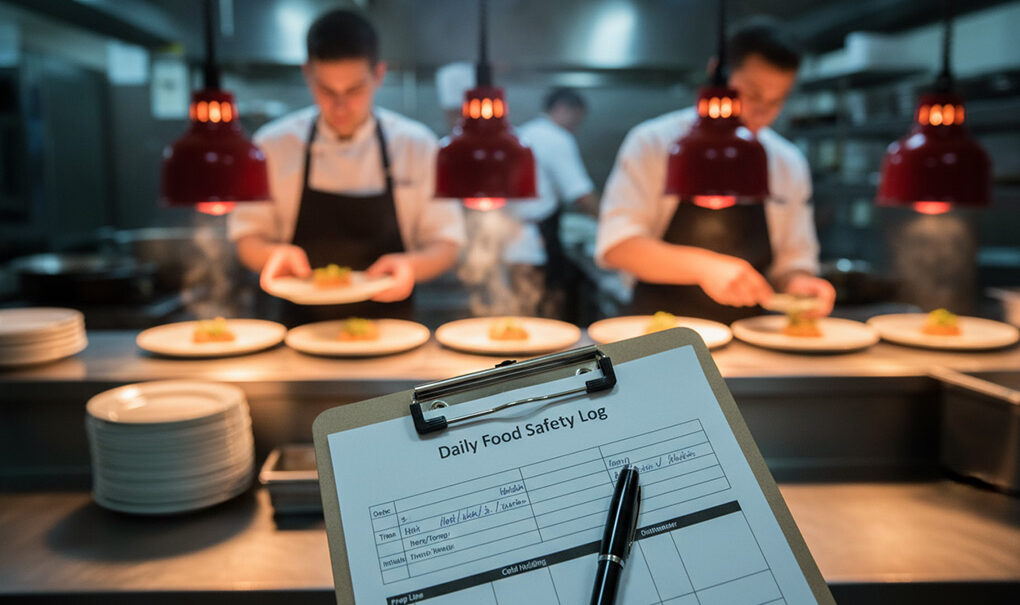
Understanding Food Safety Standards for Restaurants and Cafés in 2026
- Legal framework: Australian venues must comply with Standard 3.2.2 (Food Safety Practices) and Standard 3.2.2A (Management Tools) under the Australia New Zealand Food Standards Code.
- Temperature danger zone: Bacteria multiply rapidly between 5°C and 60°C. Cold food must stay at or below 5°C; hot food must be held at 60°C or above.
- Cross-contamination: Colour-coded boards, correct fridge storage order, and dedicated allergen equipment are the three practical controls.
- Documentation: Temperature logs, cleaning schedules and staff training records are what inspectors look for first — and what protects you if something goes wrong.
- Equipment: Reliable commercial refrigeration, hot holding equipment and blast chilling capability are the foundation of temperature compliance in any busy kitchen.
One food safety incident — a food poisoning complaint, a failed council inspection, a negative review citing illness — can undo years of goodwill in a matter of days. The Australian hospitality industry operates under a well-defined legal framework, and the venues that manage food safety confidently are not the ones doing the most paperwork. They are the ones with the clearest systems. This guide covers the key standards, the practical controls and the equipment requirements for restaurants, cafés, pubs and takeaways operating in Australia.
Legal Framework: What You Are Required to Do
Australian food businesses must comply with the Australia New Zealand Food Standards Code, enforced at the state and territory level through local councils. The two standards most relevant to day-to-day operations are:
Standard 3.2.2 — Food Safety Practices and General Requirements covers the operational requirements for food handling — temperature control, personal hygiene, cleaning and sanitising, pest control and the receipt and storage of food.
Standard 3.2.2A — Management Tools introduced mandatory food safety management requirements for higher-risk food businesses. Depending on your business classification, this may require a trained Food Safety Supervisor, documented food safety procedures, and evidence of ongoing staff training.
Standard 3.2.3 — Food Premises and Equipment sets out the physical requirements for your kitchen — surfaces, drainage, ventilation, handwashing facilities, lighting and the condition and suitability of equipment.
Temperature Control
Temperature is the most critical variable in food safety. Most foodborne pathogens — including Salmonella, Listeria and E. coli — multiply rapidly when food sits between 5°C and 60°C, known as the Temperature Danger Zone. Your systems, your equipment and your staff behaviour must work together to keep food outside this range as consistently as possible.
| Food State | Required Temperature | Equipment |
|---|---|---|
| Cold holding | 5°C or below | Upright fridges, underbench fridges, coolrooms |
| Frozen storage | -18°C or below | Chest freezers, upright freezers |
| Hot holding | 60°C or above | Pie warmers, bain maries, hot food displays |
| Reheating | 75°C or above (once only) | Combi oven, convection oven, stovetop |
| Rapid cooling | 60°C → 21°C within 2 hours; 21°C → 5°C within a further 4 hours | Blast chiller |
Personal Hygiene and Staff Behaviour
Standard 3.2.2 requires food handlers to take all reasonable measures to ensure their behaviour does not adversely affect food safety. In practice this means your team must understand and consistently apply the following:
- Handwashing for a minimum of 20 seconds with soap and warm water — before handling food, after handling raw meat, after using the bathroom, after handling waste and after any activity that contaminates the hands
- Clean uniforms, aprons and head coverings worn during all food preparation
- No jewellery on hands or wrists during food handling
- Immediate notification to a supervisor of any illness — particularly gastroenteritis symptoms — before commencing work
- No eating, drinking or smoking in food preparation areas
These requirements are not optional. Standard 3.2.2 creates a legal obligation, and a breach during an inspection — or worse, during an outbreak investigation — creates personal liability for the food handler and the business operator.
Cross-Contamination Prevention
Cross-contamination — the transfer of pathogens or allergens from one food or surface to another — is one of the most common causes of foodborne illness in commercial kitchens. The controls are well established and should be embedded in your SOPs:
Colour-Coded Equipment
Use separate cutting boards, knives and containers for raw meat, raw poultry, raw seafood, and ready-to-eat foods. Colour coding removes ambiguity for all staff at all experience levels.
Correct Fridge Storage
Raw meat on the bottom shelf, below cooked and ready-to-eat foods. Sealed containers for all stored items. This single rule prevents the most common fridge-based contamination pathway.
Allergen Management
Dedicated equipment and surfaces for allergen-free dishes where possible. Written allergen procedures communicated to all front-of-house and kitchen staff. Clear communication between floor and kitchen when an allergen requirement is identified.
Cleaning Between Tasks
Benches, boards and utensils must be cleaned and sanitised between tasks — not just at the end of service. Cleaning removes food matter; sanitising reduces bacteria. Both steps are required.
Cleaning, Sanitising and Pest Control
Standard 3.2.2 requires food businesses to maintain food premises in a clean condition and to take all practicable measures to prevent pests. Appendix 6 of the Safe Food Australia Guidebook details specific sanitiser dilution rates and contact times — your cleaning schedule should reference these directly.
A cleaning schedule must specify what is to be cleaned, who is responsible, how often, and the method and chemicals to be used. It must be accessible to all staff and verified by a supervisor. Pest control must be documented — keep records of every contractor visit and any corrective actions taken.
Supplier and Delivery Practices
Your food safety obligations begin at delivery. Standard 3.2.2 requires that food received into your business is safe and suitable. When a delivery arrives:
- Check delivery vehicle cleanliness and temperature compliance for chilled and frozen products
- Inspect packaging for damage, leaks or evidence of pest activity
- Verify that perishables — meat, dairy, seafood — are at or below 5°C at the time of delivery
- Check use-by dates provide adequate shelf life for your intended use
- Reject and document any delivery that does not meet these requirements
HACCP and Food Safety Management Systems
HACCP (Hazard Analysis and Critical Control Points) is the international framework underpinning Standard 3.2.2A. It requires operators to identify the points in their food production process where hazards could occur — cooking temperatures, cooling times, cross-contamination pathways — and implement controls at those critical points.
For most venues, this means documented cooking temperature checks (e.g. confirming chicken reaches 75°C internally), recorded cooling times, and a written corrective action procedure for when something does not meet the required standard. Standard 3.2.2A determines which category of management requirement applies to your business based on your food handling activities.
Daily, Weekly and Monthly Compliance Checklist
| Frequency | Task | Responsible |
|---|---|---|
| Daily | Record fridge, freezer and hot holding temperatures (at opening, mid-service and close) | Supervisor |
| Daily | Sanitise benches, cutting boards, meat slicers and contact surfaces between tasks and at close | Kitchen team |
| Daily | Check and document cooling times for any batch-cooked food being stored | Head Chef |
| Daily | Inspect delivery temperatures and packaging at time of receipt | Receiving staff |
| Weekly | Deep clean coolrooms, fridge seals, shelving and drain lines | Cleaner / Staff |
| Weekly | Review stock rotation (FIFO) and discard expired or deteriorated items | Head Chef |
| Weekly | Check allergen procedures and confirm menu changes have been communicated to all staff | Manager |
| Monthly | Review pest control contractor reports and log any corrective actions | Manager |
| Monthly | Review staff training records and schedule refresher training as required | Manager |
| Monthly | Audit temperature logs for anomalies and confirm calibration of probe thermometers | Manager / Supervisor |
Front-of-House and Display Equipment
Self-serve areas, cake cabinets and hot food displays carry specific food safety obligations. Display equipment must be capable of maintaining safe temperatures under real service conditions — not just when empty. A cake display fridge that drifts above 5°C during a busy lunch period is a compliance risk regardless of its nominal specification.
Sneeze guards must be clean and positioned correctly. Serving utensils must be replaced regularly. Food in self-serve display must be within use-by timeframes and temperature logs should be maintained for any display holding potentially hazardous food.
Frequently Asked Questions
Do small cafés need written food safety procedures?
Yes. Written procedures ensure every staff member follows the same steps regardless of who is on shift. Under Standard 3.2.2A, depending on your food handling activities, you may be required to have documented food safety management tools. Even where documentation is not legally mandated for your category, written procedures act as evidence of due diligence during council inspections and significantly reduce liability if an incident occurs.
How often should food safety training be refreshed?
At minimum annually. Refresher training should also be provided whenever new staff are hired, new equipment is installed, menus change significantly or after any food safety incident. Standard 3.2.2A requires food businesses in certain categories to have a qualified Food Safety Supervisor on site — check your state or territory requirements to confirm whether this applies to your business.
What is the Temperature Danger Zone?
The Temperature Danger Zone is between 5°C and 60°C — the range at which most foodborne pathogens multiply most rapidly. Standard 3.2.2 requires that potentially hazardous food is kept outside this range as much as possible. Food should not remain in the danger zone for more than 4 hours in total across its entire preparation and service life.
How do I cool hot food safely?
Hot food must be cooled from 60°C to 21°C within 2 hours, then from 21°C to 5°C within a further 4 hours (Appendix 5, Safe Food Australia). The most reliable way to achieve this in a commercial kitchen is with a blast chiller, which rapidly drops temperature without compromising food quality. Spreading food in shallow trays and placing in a coolroom is an acceptable lower-volume alternative, but must be monitored with a probe thermometer.
How do council inspectors assess food safety compliance?
Inspectors will review temperature logs, cleaning schedules, pest control records, allergen procedures, staff training documentation and the physical condition of your kitchen and equipment. They will also observe staff behaviour and check that food is stored correctly. Consistent, well-maintained documentation is the most effective demonstration of compliance — it shows the inspector that your systems work every shift, not just when they visit.
Snowmaster has supplied commercial kitchen equipment to Australian restaurants, cafés and hospitality businesses since 1945. Reliable refrigeration, hot holding and blast chilling equipment is the foundation of temperature compliance in any busy kitchen.
Browse: Commercial Fridges · Freezers · Blast Chillers · Hot Food Displays · Bain Maries