

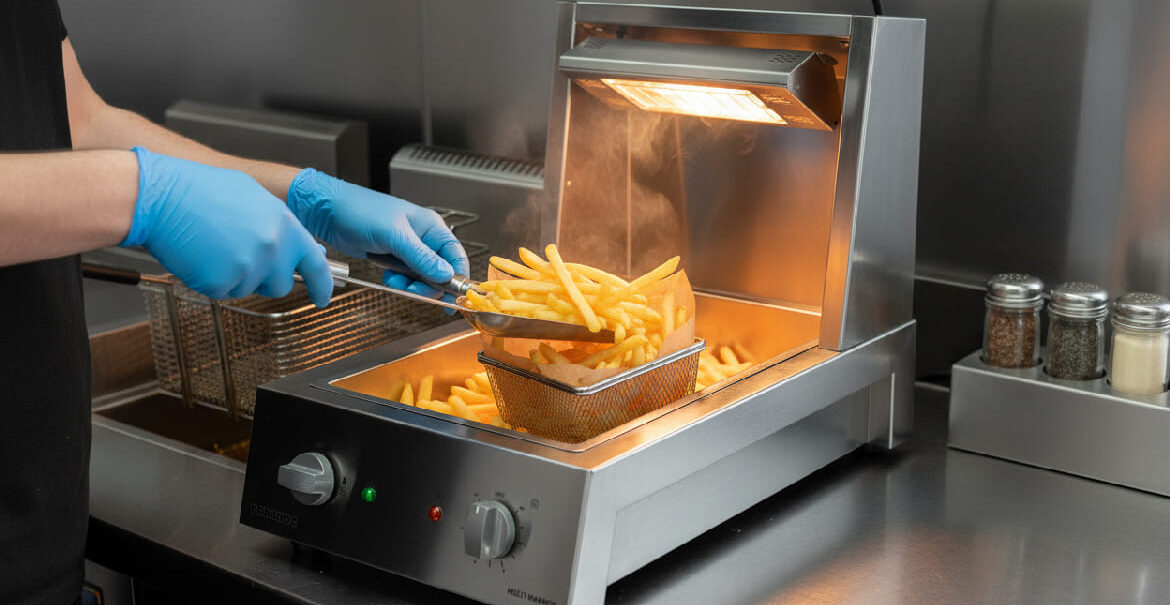
Commercial Chip Warmer Buying Guide 2026: Find the Perfect Model
Choosing the Right Chip Warmer for 2026
Last Updated: February 2026
In hospitality, consistency matters. Customers expect their chips hot, crispy, and ready to serve every time. Behind every perfect bowl is a reliable commercial chip warmer (also known as a chip dump station or fry holding station) that maintains temperature and airflow between frying and plating.
With rising energy costs and tighter food-safety auditing across Australia in 2026, venues are prioritising energy-efficient models with consistent temperature control and easy-clean stainless steel construction.
This buying guide is built for Australian cafés, pubs, restaurants, and takeaways looking to compare commercial chip warmers in Australia and choose a model that delivers reliability during high-pressure service periods.
Too Long; Didn’t Read? Here’s the Short Version
- Choose countertop, floor-standing, or pass-through based on peak turnover.
- Radiant heat suits fast turnover; dry-heat systems suit balanced holding.
- Ensure airflow and perforated pans to prevent sogginess.
- Hot food must be held at 60°C or above under Australian food safety standards.
- Energy efficiency and local warranty support matter more than lowest price.
What is a Chip Warmer?
A chip warmer — also referred to as a commercial french fry warmer or chip dump — keeps freshly fried chips hot and crisp without continuing to cook them. Proper airflow prevents steam buildup, which is the primary cause of soggy chips.
Many kitchens pair chip warmers with equipment like commercial bain maries to streamline service lines and maintain workflow efficiency.
Types of Chip Warmers
Countertop Chip Warmers
- Best for: Cafés, food trucks, small takeaways
- Capacity: 4–6kg typical
- Pros: Compact, affordable, flexible placement
- Cons: Lower peak-hour output
Floor-Standing Chip Warmers
- Best for: Pubs, fish-and-chip shops, high-volume venues
- Capacity: 10–15kg+
- Pros: Large holding capacity, multi-bin options
- Cons: Requires dedicated floor space
Pass-Through Chip Warmers
- Best for: Quick-service restaurants, large service passes
- Pros: Fastest workflow, reduces staff congestion
- Cons: Requires installation cut-out
Heating Technology: Radiant vs Dry Heat
- Radiant Heat (Heat Lamps): Infrared directional heat, ideal for rapid turnover.
- Dry Heat (Under-Pan): Even base heating, better for slightly longer holding periods and improved energy efficiency.
Key Features to Consider
Capacity & Airflow
Under-sizing forces chips to stack too high, restricting airflow and causing steaming. Choose a model suited to peak-hour turnover.
Temperature Control
For food safety compliance in Australia, hot food must be held at 60°C or above. Most venues hold chips between 82°C–88°C for optimal texture and service speed.
Humidity Management
Look for perforated pans, ventilation channels, and moisture control to prevent limp chips.
Build Quality
Stainless steel construction with durable welds and double-wall insulation improves longevity and reduces heat radiation into the kitchen.
How Much Power Does a Chip Warmer Use?
Commercial chip warmers typically range between 800W and 2400W depending on size and heating system.
- Smaller countertop models: 800W–1200W
- Mid-size units: 1200W–1800W
- High-capacity floor models: 2000W+
Energy-efficient insulated models can reduce ongoing power consumption — an important consideration with rising commercial electricity costs in 2026.
Costs and Budgeting (Australia)
| Type | Best For | Typical Price Range (AUD) |
|---|---|---|
| Countertop | Cafés / Small Takeaways | $800 – $1,800 |
| Floor-Standing | Pubs / High Volume | $2,000 – $4,500 |
| Pass-Through | QSR / Large Venues | $3,000 – $6,000 |
While upfront price matters, consider long-term energy costs, warranty coverage, and local service availability.
Common Mistakes to Avoid
- Buying too small for peak-hour demand.
- Ignoring airflow and pan perforation.
- Choosing lowest price over durability.
- Not confirming compliance with Australian food safety standards.
- Overloading trays, causing steam buildup.
Maintenance and Cleaning
Daily
- Wipe exterior and remove crumbs.
- Monitor holding temperature.
Weekly
- Remove trays and deep clean.
- Inspect heating elements.
Monthly
- Inspect wiring and components.
- Recalibrate thermostat if required.
Best Chip Warmer Brands in Australia
- Roband – Durable Australian-built units with strong local support.
- Hatco – Premium infrared Glo-Ray technology.
- Woodson – Reliable stainless steel builds.
- Anvil – Rugged benchtop options.
- FED – Broad commercial range with strong distribution network.
- Apuro – Budget-friendly entry-level solutions.
Conclusion: Keeping Your Chips Hot, Crispy and Consistent
The right commercial chip warmer improves service speed, product quality, and consistency during peak trade.
Need help choosing the right size? Our team can recommend a model based on your peak-hour turnover and kitchen layout.
Frequently Asked Questions
What temperature should I set a chip warmer to?
Hot food should be held at 60°C or above under Australian food safety standards. Most venues run chip warmers between 82°C and 88°C to maintain crispness and service quality.
How often should it be cleaned?
Daily wipe-down, weekly tray cleaning, and monthly deep cleaning are recommended.
Can I store other fried foods in it?
Yes, items like nuggets, onion rings, and battered products can be held, provided holding time and airflow are managed correctly.
How do I stop chips from going soggy?
Drain excess oil before loading, avoid overloading trays, and use a model with strong airflow and perforated pans.
How long can chips stay in a warmer?
For best quality, chips should ideally be held for no more than two hours.
What is the advantage of a spreader cabinet?
A spreader cabinet allows freshly fried chips to drain and cool slightly before moving into the holding warmer, improving texture consistency.