

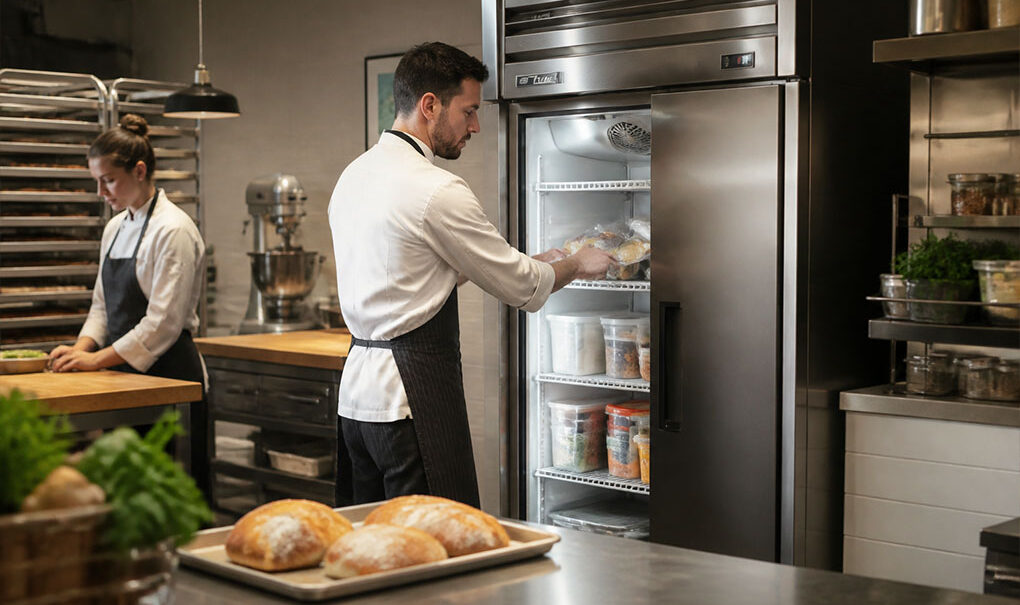
Best Commercial Upright Freezer Australia: Complete Buying Guide
- Best for speed: Commercial upright freezers provide faster stock access and better organisation than chest freezers.
- Best features: Climate rating, energy efficiency, stainless steel construction, frost-free operation and adjustable shelving.
- Best for: Restaurants, cafés, catering kitchens, hospitality venues and food production businesses.
- Buying tip: Always choose a freezer rated for Australian commercial kitchen ambient conditions.
If you are searching for the best commercial upright freezer, choosing the right model can dramatically improve workflow, food safety, stock organisation and long-term operating costs. A commercial upright freezer is one of the most important refrigeration assets in a hospitality business, and selecting the wrong unit can lead to inefficiency, temperature instability and unnecessary energy expenses.
For restaurants, cafés, catering operations and food production kitchens, upright freezers offer faster access, organised shelving and better workflow compared with many bulk-storage alternatives.
This guide explains how to choose the best commercial upright freezer for your business, what features matter most and which buying mistakes to avoid.
Why Choose the Best Commercial Upright Freezer?
Better Workflow
Vertical shelving helps staff quickly find stock and reduces time with the door open.
Structured Storage
Adjustable shelving supports better inventory management and less product loss.
Smaller Footprint
Vertical storage maximises capacity while preserving valuable floor space.
Heavy Duty Reliability
Commercial-grade units are designed for demanding daily hospitality use.
Best Commercial Upright Freezer by Business Type
| Business Type | Recommended Freezer Type |
|---|---|
| Café | Compact upright commercial freezer |
| Restaurant | Mid to large stainless steel upright freezer |
| Catering Business | Heavy-duty high-capacity upright freezer |
| Production Kitchen | Large upright freezer with climate-rated compressor |
| Overflow Storage | Chest freezer alternative may suit better |
Commercial Upright Freezer vs Chest Freezer
| Feature | Commercial Upright Freezer | Chest Freezer |
|---|---|---|
| Access Speed | Fast organised shelving | Slower bulk access |
| Footprint | Vertical space-saving design | Larger floor footprint |
| Best For | Daily active kitchens | Bulk overflow storage |
| Stock Visibility | High | Lower |
Browse Snowmaster’s range of commercial upright freezers and commercial chest freezers.
Best Commercial Upright Freezer Features to Look For
Climate Rating for Australian Conditions
The best commercial upright freezer should be rated for hot Australian commercial kitchen environments. Ideally choose units rated for 38°C to 43°C ambient conditions.
Energy Efficiency
Refrigeration can be a major operational cost. Efficient compressors, quality insulation and strong sealing reduce long-term power expenses.
Australian business energy guidance is available through Australian Government energy resources.
Frost-Free Operation
Frost-free commercial upright freezers reduce maintenance time and help maintain operational consistency.
Stainless Steel Construction
Durable stainless steel construction improves hygiene, longevity and ease of cleaning.
Capacity and Shelf Layout
Choose realistic capacity based on peak service stock requirements, not quiet periods.
Installation and Placement Tips
Installation Checklist
- Allow ventilation clearance around the unit
- Avoid placement near commercial cooktops
- Keep away from combi ovens
- Ensure stable level flooring
- Confirm electrical compliance
Australian compliance guidance is available through Food Standards Australia New Zealand.
Commercial Upright Freezer ROI and Running Costs
A quality commercial upright freezer can deliver 10 to 15 years of service when maintained correctly.
Long-term ROI comes from:
- lower food spoilage
- improved staff productivity
- better stock organisation
- reduced downtime
- lower energy usage from efficient systems
Common Commercial Upright Freezer Buying Mistakes
Avoid These
- Buying based only on price – cheap units often cost more long term
- Ignoring climate rating – critical in Australian kitchens
- Choosing the wrong capacity – workflow suffers
- Poor placement planning – heat exposure reduces performance
- Ignoring ventilation requirements – compressor performance suffers
Frequently Asked Questions About the Best Commercial Upright Freezer
What temperature should a commercial upright freezer be set to?
Most commercial upright freezers should operate between -18°C and -20°C for safe frozen storage.
How long does a commercial upright freezer last?
With proper maintenance, a quality unit may last 10 to 15 years.
Are upright freezers better than chest freezers?
For active commercial kitchens, upright freezers usually offer better workflow and stock organisation.
Can a commercial upright freezer be transported lying down?
If unavoidable, allow the freezer to stand upright for at least 24 hours before powering on.
What climate rating is best in Australia?
Commercial kitchens should generally choose units rated for at least 38°C, ideally 43°C.
Browse Commercial Upright Freezers →
Also browse: Commercial Freezers · Under Bench Freezers · Blast Chillers · Contact Us