

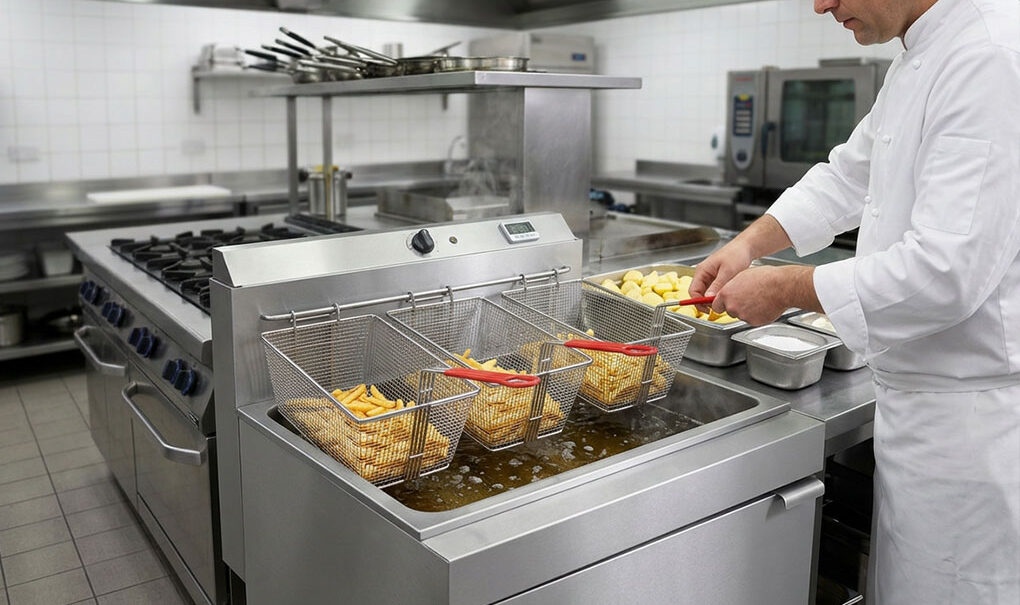
How to Choose a Commercial Deep Fryer for Your Kitchen
- Benchtop or floor standing: Benchtop fryers suit lower-volume operations and tight spaces; floor-standing models handle continuous high-volume service.
- Gas vs electric: Gas heats faster and suits high-throughput kitchens already running gas infrastructure; electric is simpler to install and more precise for temperature control.
- Single vs twin tank: Single tank for bulk frying of one product; twin tank to run two oils simultaneously without cross-contamination — essential for venues frying fish and chips separately.
- Oil capacity: Match oil capacity to your busiest service period — undersizing means constant oil temperature drop and greasy food.
- Oil filtration: Built-in filtration systems extend oil life significantly and reduce the biggest ongoing operating cost of running a fryer.
- Compliance: Gas fryers require AGA-certified installation; all fryers must meet FSANZ Standard 3.2.3 food safety requirements.
- Top brands: Goldstein and Cobra for premium performance; FED and Anvil for reliable value across the mid-range.
A commercial deep fryer is one of the hardest-working pieces of equipment in a professional kitchen. It runs at high temperatures continuously through service, handles constant loading and unloading, and the quality of everything coming out of it — chips, chicken, fish, battered seafood, doughnuts — depends entirely on how well it’s matched to the operation it’s in.
Getting it wrong shows up immediately: oil temperature dropping between batches, greasy product, cross-contamination between food types, excessive oil consumption, or a unit that simply can’t keep up with a busy service. This guide covers everything you need to choose the right deep fryer for your kitchen — types, configurations, gas vs electric, oil management, compliance and maintenance.
Types of Commercial Deep Fryers
Benchtop Deep Fryer
Sits on a bench or prep surface. Smaller oil capacity (5–15L typically) and lower output than floor-standing models, but takes up minimal floor space and is easier to move and clean around. Suits cafés, food trucks, small restaurants and any venue where frying is a secondary cooking method rather than the primary production driver. Also available in specialist donut fryer configurations.
Floor-Standing Deep Fryer
Purpose-built for high-volume continuous frying. Larger oil capacity (15–50L+), higher power output, faster recovery time between loads. The standard choice for fish and chip shops, pubs, high-volume restaurants and any operation where the fryer is running throughout service. Available in single and twin tank configurations and with built-in filtration systems.
Twin Tank Fryer
Two independently controlled fry tanks in a single unit. Each tank runs its own oil, its own temperature and its own baskets. Essential for venues that need to fry fish and chips separately to avoid cross-contamination, or that fry both sweet and savoury products. More efficient use of floor space than two separate single-tank units.
Donut Fryer
Designed specifically for donut and churro production. Typically features a wider, shallower tank than a standard fryer to allow product to float and cook evenly on both sides, often with a conveyor or paddle mechanism to turn product automatically. See Snowmaster’s full range of donut fryers.
Gas vs Electric
Gas — For High Throughput
- Faster heat recovery between loads — critical when the fryer is running continuously
- Lower running cost per batch in high-volume operations
- Higher BTU output means oil returns to temperature faster after cold product is added
- Requires AGA-certified gas fitting and adequate ventilation
- Suits kitchens already running gas infrastructure for commercial stoves and cooktops
- Best for: Fish and chip shops, pubs, high-volume restaurants, fast food
Electric — For Precision and Simplicity
- More precise thermostat control — holds set temperature more consistently
- Simpler installation — no gas fitting required
- Lower upfront installation cost in most sites
- Easier to relocate if kitchen layout changes
- Slower recovery time than gas at equivalent output levels
- Best for: Cafés, small restaurants, benchtop applications, venues without gas infrastructure
Sizing Your Fryer
Oil capacity is the primary sizing metric for a commercial deep fryer. The right capacity depends on your peak service volume — not your average throughput. An undersized fryer running at maximum load through a busy service will drop oil temperature constantly, producing greasy, undercooked product.
| Oil Capacity | Configuration | Typical Use |
|---|---|---|
| 5–10L | Benchtop, single tank | Cafés, small restaurants, food trucks — frying as a secondary function |
| 10–15L | Benchtop or floor-standing, single tank | Mid-volume restaurants, pubs — regular frying across service |
| 15–25L | Floor-standing, single or twin tank | Busy restaurants, hotel kitchens, catering — continuous service frying |
| 25L+ | Floor-standing, twin tank or multiple units | Fish and chip shops, high-volume fast food, large event catering |
Single Tank vs Twin Tank
Single Tank
- Larger basket capacity — better for bulk frying of a single product type
- Simpler operation and cleaning
- Lower purchase price than twin tank equivalent
- Can’t run two different oils simultaneously
- Best for: Operations frying one product type — chips only, chicken only, or venues where cross-contamination between products isn’t a concern
Twin Tank
- Two independent tanks, oils and temperatures in a single footprint
- Eliminates cross-contamination between food types — fish oil stays separate from chip oil
- Can run different temperatures simultaneously — e.g. 160°C for fish, 180°C for chips
- Essential for venues with halal requirements or allergen separation needs
- Best for: Fish and chip shops, venues with diverse fried menus, allergen-conscious operations
Oil Management — The Biggest Operating Cost
Cooking oil is the largest ongoing expense of running a commercial deep fryer. How quickly oil degrades depends on frying temperature, the type of food being cooked, how often the oil is filtered, and how well food debris is removed between batches.
Built-in filtration systems
Many floor-standing fryers include a built-in oil filtration system that pumps oil through a filter to remove food particles. Filtered oil lasts significantly longer than unfiltered oil — a well-maintained filtration system can extend oil life by 50% or more, which directly reduces one of the biggest line items in your kitchen operating costs. If you’re running a high-volume frying operation, a fryer with built-in filtration pays for the price premium quickly.
Cool zones
A cool zone is an area at the base of the fry tank that sits below the heating elements and stays at a lower temperature than the active frying zone. Food particles that fall from product during frying sink into the cool zone rather than burning in the hot oil. Burnt particles in active oil degrade the oil rapidly and impart bitter flavour to food. Cool zone fryers maintain oil quality significantly longer than flat-bottom fryers without them.
Manual oil maintenance
Regardless of whether your fryer has built-in filtration, daily manual maintenance extends oil life:
- Skim food debris from the oil surface during service using a fine mesh skimmer
- Filter oil through a paper filter into a clean container at the end of each service
- Never mix fresh and used oil — it accelerates degradation of the fresh oil
- Track oil colour and smell — darkening colour and off-smell are the reliable indicators that oil needs replacing
Key Features to Look For
Drain valve
A front-mounted drain valve is essential for safe, efficient oil changes. Without one, draining hot oil requires removing the tank manually — slow, awkward and a burns risk. Always confirm a drain valve is fitted before purchasing, particularly on floor-standing models.
Basket lifters
Programmable or automatic basket lifters raise baskets out of the oil when the timer completes, eliminating the risk of overcooked product during a busy service when staff attention is split. A useful feature on any fryer in a high-tempo kitchen.
Digital temperature control and timers
Digital controls allow precise temperature setting and repeatable results across service. Combined with programmable timers, they reduce reliance on staff judgement for timing — particularly valuable during peak service or when training new kitchen staff.
Tank shape — v-bottom vs flat bottom
V-bottom tanks funnel food debris to the centre of the tank, making it easier to drain and clean. Flat-bottom tanks are simpler in construction and easier to clean manually but accumulate debris across the entire tank base. For high-volume operations, v-bottom or cold zone fryers are worth the additional cost.
Australian Compliance
- AGA certification (gas): Gas fryers must be AGA-certified for Australian use and installed by a licensed gas fitter. Confirm certification before purchasing any imported gas model.
- RCM mark (electric): All electrical appliances sold in Australia must carry the Regulatory Compliance Mark.
- Ventilation: Deep fryers produce significant heat, steam and airborne grease. Your canopy extraction system must be rated for the fryer’s output — undersized extraction is a compliance issue and a fire risk.
- Fire suppression: Many councils and insurers require commercial kitchens to have a wet chemical fire suppression system above the fryer. Confirm your requirements with your local authority before installation.
Brand Guide
| Brand | Position | Strengths | Best For |
|---|---|---|---|
| Goldstein | Premium | Australian-made, heavy-duty construction, excellent heat recovery, strong local service network, gas and electric options | High-volume operations needing long-term reliability and local support |
| Cobra | Premium | Purpose-built for Australian commercial kitchens, strong range of floor-standing gas and electric models, good filtration options | Restaurants, pubs and fish and chip shops needing reliable high-output frying |
| FED | Mid-Range | Wide range across benchtop and floor-standing, reliable performance, competitive pricing, good availability | Mid-volume restaurants and cafés wanting solid performance without premium pricing |
| Anvil | Value | Dependable entry-level benchtop and floor-standing models, simple operation, competitive price point | Start-ups, smaller venues, supplementary frying capacity |
Common Buying Mistakes
Avoid These
- Sizing to average throughput instead of peak service — a fryer that copes on a quiet Tuesday will bottleneck on a Friday night; always size to your busiest period
- Skipping the drain valve — any fryer without a front-mounted drain valve makes oil changes slow and dangerous; always confirm this is fitted
- Choosing a single tank when you need separation — if you fry fish and chips in the same oil, cross-contamination affects flavour; twin tank is the right call for any mixed frying operation
- Ignoring oil filtration — not budgeting for a filtration-equipped model is a false economy; the oil cost savings from extended oil life outweigh the price premium within months
- Not confirming gas certification — importing an uncertified gas fryer and having it installed is a compliance and insurance risk; always confirm AGA certification
- Underestimating ventilation requirements — a floor-standing gas fryer at full capacity produces significant heat and grease-laden air; your existing canopy may not be adequate
Maintenance Schedule
A commercial deep fryer operating through multiple services daily needs consistent maintenance to perform reliably and reach its rated lifespan.
Daily
- Skim food debris from oil surface during service and between batches
- Filter oil through a paper or mesh filter at end of service
- Check oil colour and smell — replace if darkened significantly or off-smelling
- Wipe down exterior surfaces and controls while still warm
- Check that the drain valve operates correctly and shows no signs of leaking
Weekly
- Full boil-out: drain oil, fill tank with water and cleaning solution, bring to temperature, drain and rinse thoroughly — removes carbonised grease from tank walls and elements
- Remove and clean baskets separately — inspect handles and hinges for wear
- Clean behind and beneath the fryer — grease accumulation in this area is a fire risk
- Inspect heating elements (electric) for scale or carbon buildup
Monthly
- Check thermostat calibration with an independent probe thermometer — a thermostat drifting 10–15°C affects both food quality and food safety
- Inspect gas burners and ignition (gas models) — any irregular flame pattern requires a certified technician
- Check all seals and gaskets around the tank and drain valve for deterioration
- Service the oil filtration system if fitted — replace filter media per manufacturer schedule
Frequently Asked Questions
What size commercial deep fryer do I need?
Size to your peak service period, not your average. A rough guide is 1L of oil capacity per 1kg of product per hour at peak, plus a 25% buffer. For a café frying occasionally, a 8–10L benchtop fryer is usually sufficient. For a pub or restaurant frying continuously through a dinner service, a 15–25L floor-standing model is more appropriate. Fish and chip shops typically run 25L+ across twin tanks.
Gas or electric deep fryer — which is better?
Gas for high-volume operations where recovery time between loads matters — gas heats faster and returns to temperature quicker after cold product is added. Electric for precision, simpler installation and lower-volume applications where temperature consistency is more important than recovery speed. If you’re already running gas infrastructure for stoves and cooktops, gas is usually the better call for a floor-standing fryer.
How often should I change the oil in a commercial fryer?
There’s no fixed schedule — oil condition depends on what you’re frying, how often you filter and how well you manage debris. The reliable indicators are colour (significant darkening from fresh oil) and smell (rancid or off). Daily filtering and skimming can extend oil life substantially. A fryer with a cool zone or built-in filtration will use oil more slowly than one without. Most busy operations change oil every 2–5 days; some high-volume fish and chip shops change daily.
What is a cool zone on a deep fryer?
A cool zone is an area at the base of the fry tank that sits below the heating elements and operates at a lower temperature than the active frying zone. Food debris that falls from product during frying sinks into this cooler area rather than burning in the hot oil. Burnt debris degrades oil rapidly and affects food flavour — a cool zone fryer maintains oil quality significantly longer than a flat-bottom fryer.
Do I need twin tanks or is a single tank enough?
Single tank if you’re frying one product type or products that share the same oil without issue. Twin tank if you need to fry fish and chips separately, run halal and non-halal products independently, or fry both sweet and savoury items. Running fish and chips in the same oil is the most common reason hospitality operators upgrade from single to twin tank — the flavour transfer is noticeable and customers notice it.
What temperature should a commercial deep fryer run at?
Most commercial frying is done between 160°C and 190°C depending on the product. Chips are typically fried at 175–180°C; fish and battered seafood at 180–185°C; doughnuts at 175°C. The exact temperature affects crust development, oil absorption and cook time — too low produces greasy product; too high burns the exterior before the interior is cooked. A fryer with digital temperature control makes maintaining the correct set point much easier than analogue thermostats.
Browse Commercial Deep Fryers →
Also browse: Donut Fryers · All Cooking Equipment · Commercial Stoves · Commercial Cooktops · Contact Us