

10 Commercial Fridge Maintenance Mistakes and How to Avoid Them
- Temperature records: Log fridge temperatures at least twice daily — at opening and close. Temperature drift above 5°C is the earliest warning sign of a developing fault.
- Door seals: Inspect gaskets weekly. A damaged seal is the single most common cause of elevated fridge temperatures and unnecessary compressor wear.
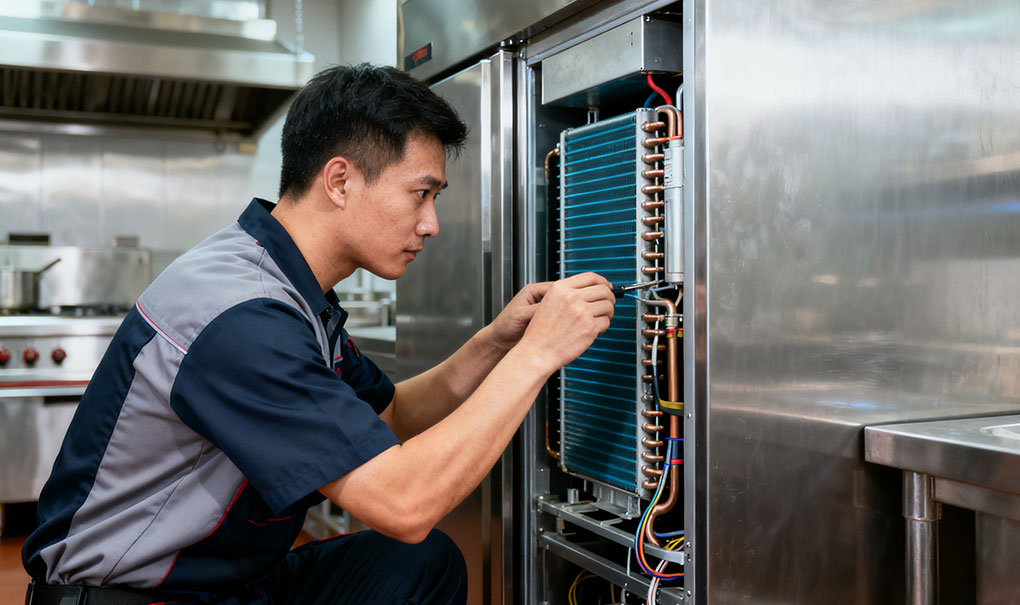
- Coil cleaning: Clean condenser coils every 3 months. Dust and grease buildup is the most common cause of preventable compressor failure in commercial fridges.
- Overloading: Air must circulate. An overloaded fridge cannot maintain even temperatures — the back and bottom will be cold while the front and top may be in the danger zone.
- Food storage order: Raw meat on the bottom shelf, below cooked and ready-to-eat foods. Required under Standard 3.2.2 — and the most common cross-contamination risk found during inspections.
Commercial refrigeration is one of the highest-cost assets in any hospitality kitchen, and one of the most consequential when it fails. A fridge running above 5°C is not just an equipment problem — it is a food safety compliance issue under Standard 3.2.2 of the Australia New Zealand Food Standards Code. Most commercial fridge breakdowns and compliance failures are preventable. They trace back to the same ten maintenance mistakes, repeated across the industry.
The 10 Mistakes — at a Glance
- Skipping regular cleaning of the interior, coils and drain lines
- Not keeping temperature records
- Ignoring defrost cycles
- Using the wrong fridge type for the application
- Ignoring early warning signs until they become failures
- Attempting DIY repairs without manufacturer guidance
- Storing food in the wrong order
- Overloading the fridge
- Not checking door seals regularly
- Skipping preventative maintenance schedules
Mistake 1: Skipping Regular Cleaning
Dirt and grease buildup inside a commercial fridge does not just look bad — it creates hygiene risks, attracts pests and forces the unit to work harder to maintain temperature. Blocked drain lines cause water pooling and mould. Dirty condenser coils are one of the leading causes of compressor failure.
A minimum cleaning routine should cover the interior (shelves, walls, drain tray) weekly, door gaskets weekly, and condenser coils every three months. For any fridge used to store raw meat or seafood, interior cleaning should occur daily. Document it — a cleaning schedule is a Standard 3.2.2 requirement and the first thing an inspector will ask for.
Mistake 2: Not Keeping Temperature Records
Temperature drift is often gradual. A fridge that is running at 4°C today may be at 6°C in two weeks — and without a log, you will not notice until food starts spoiling or an inspector flags it. Under Standard 3.2.2, you are required to take all reasonable measures to ensure food is kept at safe temperatures. A documented temperature log is your evidence of compliance.
Log fridge temperatures at least twice daily — at opening and close. Use a calibrated probe thermometer, not just the unit’s internal display. Record the reading, the time and the staff member responsible. If you see a trend of creeping temperatures, act before the unit fails.
Mistake 3: Not Performing Proper Defrost Cycles
Frost buildup on evaporator coils restricts airflow and forces the compressor to work harder to compensate. Most commercial fridges have an automatic defrost cycle — but these can fail, and in high-humidity environments or frequently opened fridges, frost can accumulate faster than the automatic cycle manages.
If you notice frost accumulation on the interior walls or coils, do not wait for the automatic cycle. Turn the unit off, remove the contents to another fridge, allow it to defrost fully, clean the interior and restart. Check that the automatic defrost timer and heater are functioning. If frost recurs quickly, call a refrigeration technician.
Mistake 4: Using the Wrong Fridge for the Application
A solid-door upright fridge is not the right choice for a deli counter. A glass-door display fridge is not the right choice for raw meat storage. An underbench fridge specified for a low-volume café will not keep up with the demands of a high-volume pub kitchen. Mismatched equipment runs above its design limits, wears faster and is more likely to drift out of temperature compliance.
Before purchasing, confirm the fridge’s temperature range, capacity, duty cycle and intended application. If you are unsure, Snowmaster’s team can help you match the right unit to your kitchen. Browse our full commercial fridge range — upright, underbench, display and coolroom options — or read our commercial upright fridge buying guide.
Mistake 5: Ignoring Early Warning Signs
Commercial fridges give clear signals before they fail: unusual running sounds (clicking, humming, rattling), temperature fluctuations that recover slowly, excessive condensation on the exterior, frost accumulation on the interior walls, or the unit running continuously without cycling off. These are not normal operating conditions — they are fault indicators.
The cost of a service call to diagnose and fix an early-stage problem is a fraction of the cost of a compressor replacement, a full refrigerant recharge or the food loss from a complete failure. Address warning signs within 24 to 48 hours of noticing them.
Mistake 6: Attempting Improper Repairs
Refrigeration systems in Australia operate under strict licensing requirements. Work involving refrigerant handling must be performed by a licensed refrigeration mechanic holding an ARCtick licence under the Australian Refrigeration Council framework. Attempting to handle refrigerant without a licence is illegal and can void your equipment warranty.
For any fault beyond basic cleaning, gasket replacement or temperature calibration, engage a licensed refrigeration technician. Keep a record of all service visits, parts replaced and work performed. This documentation supports warranty claims and demonstrates due diligence if a food safety incident is ever investigated.
Mistake 7: Incorrect Food Storage Order
The storage order inside a commercial fridge is a food safety requirement, not a suggestion. Raw meat, poultry and seafood must be stored on the bottom shelf, below ready-to-eat foods, cooked foods and dairy. This prevents raw juices from dripping onto food that will not be cooked again before service.
All stored items should be in sealed containers or covered with cling film. Use-by dates must be checked on rotation — FIFO (first in, first out) is the required stock rotation method. Colour-coded containers and clear labelling reduce the risk of cross-contamination and make it easier for all staff to maintain correct storage practices regardless of experience level.
Mistake 8: Overloading the Fridge
Cold air must circulate to maintain even temperatures throughout the fridge. An overloaded unit cannot circulate air effectively — the areas closest to the evaporator will be at the correct temperature while other areas, particularly the door shelves and top shelf, may drift into the danger zone. The compressor also works harder when overloaded, accelerating wear.
Leave at least 20–25% of the fridge volume clear for air circulation. If your current fridge is regularly operating near capacity, it is undersized for your volume — an additional unit or an upgrade is a better long-term investment than running an overloaded fridge with compromised performance.
Mistake 9: Not Checking Door Seals
Door gaskets are the most frequently neglected maintenance item on commercial fridges, and one of the most consequential. A worn or damaged seal allows warm ambient air to enter the fridge continuously, forcing the compressor to run almost constantly to compensate. This shows up in your energy bill before it shows up in your temperature log — but both will be affected.
Inspect door seals weekly. Run a piece of paper between the seal and the door frame and close the door — if the paper slides out easily, the seal is not closing properly. Replace damaged or compressed gaskets immediately. Replacement gaskets are inexpensive; a compressor failure caused by a failed gasket is not.
Mistake 10: Skipping Preventative Maintenance
Reactive maintenance — fixing things after they break — is consistently more expensive than preventative maintenance. A commercial fridge on a structured maintenance schedule will have a significantly longer operational life, lower energy costs and fewer unexpected failures than an identical unit receiving only reactive repairs.
Build a maintenance schedule and stick to it. The table below outlines the minimum frequency for each key task.
| Task | Frequency | Responsible |
|---|---|---|
| Log fridge and freezer temperatures | Twice daily | Opening / closing supervisor |
| Wipe interior shelves and walls | Daily (raw protein storage) / Weekly (general) | Kitchen staff |
| Inspect and clean door gaskets | Weekly | Kitchen staff |
| Check and clear drain line | Weekly | Kitchen staff |
| Clean condenser coils | Every 3 months | Technician or senior staff |
| Check automatic defrost cycle operation | Every 3 months | Technician |
| Full service inspection by licensed technician | Annually (minimum) | Licensed refrigeration technician |
| Calibrate probe thermometers | Every 6 months | Manager |
Frequently Asked Questions
How often should a commercial fridge be professionally serviced?
At minimum annually for a full inspection by a licensed refrigeration technician. High-volume kitchens or fridges storing high-risk food (raw meat, seafood, dairy) should consider twice-yearly servicing. Between professional services, your own staff should maintain the weekly and monthly tasks in the maintenance schedule above.
What temperature should a commercial fridge run at?
Under Standard 3.2.2 of the Australia New Zealand Food Standards Code, potentially hazardous food must be kept at 5°C or below. Set your fridge to run between 1°C and 4°C to maintain safe food temperatures even when the door is opened frequently during service.
Why is my commercial fridge running warm?
The most common causes are: dirty condenser coils restricting heat exchange; a damaged or compressed door gasket allowing warm air to enter; the unit being overloaded, restricting air circulation; a failing compressor or low refrigerant charge; or the automatic defrost cycle malfunctioning and causing frost buildup on the evaporator coils. Check the door seals and coils first — these are the most common causes and the easiest to address without a technician.
When should I replace a commercial fridge rather than repair it?
As a general guide, if repair costs exceed 50% of the replacement cost of the unit, replacement is usually the better investment. Also consider: frequency of breakdowns, age of the unit (commercial fridges typically have a 10–15 year lifespan), energy efficiency of the existing unit versus current models, and whether the unit is still meeting your volume requirements. A licensed technician can give you an honest assessment of remaining useful life.
Snowmaster has supplied commercial refrigeration to Australian restaurants, cafés and hospitality businesses since 1945. Browse our full range of upright fridges, underbench fridges, display fridges and coolroom options — or talk to our team about the right specification for your kitchen.
Also browse: Commercial Freezers · Underbench Fridges · Blast Chillers · Upright Fridge Buying Guide · Contact Us